
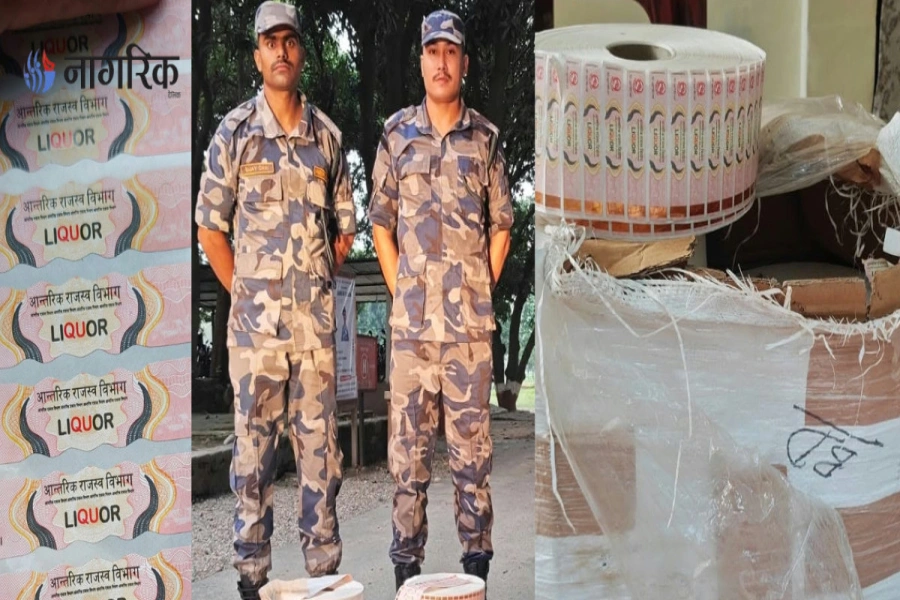
Seizure of 120,000 Excise Stickers Near Nepal-India Border Raises Alarms Over Tax System Integrity
Armed Police Force seized 120,000 excise stickers being smuggled from India into Nepal, raising serious concerns about the security of the government's revenue collection system. The stickers, potentially worth Rs 10.584 million in excise duty, have prompted an investigation into whether they are genuine or counterfeit, and how they escaped government control.
RAUTAHAT, Oct 2 — The seizure of 120,000 Nepal government excise stickers from smugglers near the Nepal-India border has cast a spotlight on the vulnerabilities of the country's tax administration system.
The stickers were confiscated by a team from the Armed Police Force Border Outpost, Sarmujawa, near Tejapakad in Paroha Municipality-3 of Rautahat. According to Superintendent of Police Chet Raj Joshi, chief of APF Nepal No. 11 Battalion, smugglers abandoned the consignment and fled upon seeing security personnel.
The abandoned materials were found to be excise stickers apparently issued by the Inland Revenue Department. They were subsequently handed over to the Inland Revenue Office in Simara for investigation.
The seized materials comprised six rolls, with around 20,000 stickers per roll, according to the APF. The stickers are reportedly intended for 50 UP, 180 ml bottles of alcoholic beverages. At an excise duty rate of Rs 88.20 per sticker, the total excise duty represented by the 120,000 stickers amounts to approximately Rs 10.584 million.
A small sticker with a big role
Excise stickers are a critical component of Nepal's tax administration for alcoholic beverages and other excisable goods. They are affixed to bottles after prescribed production and tax procedures are completed, linking products to the monitoring and collection system for excise revenue.
Any unauthorized use of genuine stickers—or the production and circulation of counterfeit ones—could allow untaxed or illegally produced alcohol to enter the market. It could also disadvantage legitimate manufacturers who pay excise duty, VAT, and other taxes.
Where did the stickers come from?
If the seized stickers are genuine, investigators must determine how they escaped government control and ended up outside Nepal before being smuggled back in. This could raise questions about every stage of the sticker supply chain, from production and storage to distribution, record-keeping, and use by alcohol manufacturers.
If they are counterfeit, investigators face a different but equally important question: how did a network manage to reproduce government excise stickers in such large quantities?
The APF's calculation of Rs 10.584 million represents the excise duty associated with the seized stickers, not necessarily the actual revenue loss suffered by the government. Whether the stickers were intended for use by an alcohol producer, for illegal alcohol production, or for another purpose remains to be established.
Against the backdrop of persistent cross-border smuggling of goods and alcohol, the seizure has added a new concern for authorities: the possibility that even the stickers meant to prove taxes have been paid could themselves become part of the illegal trade.