
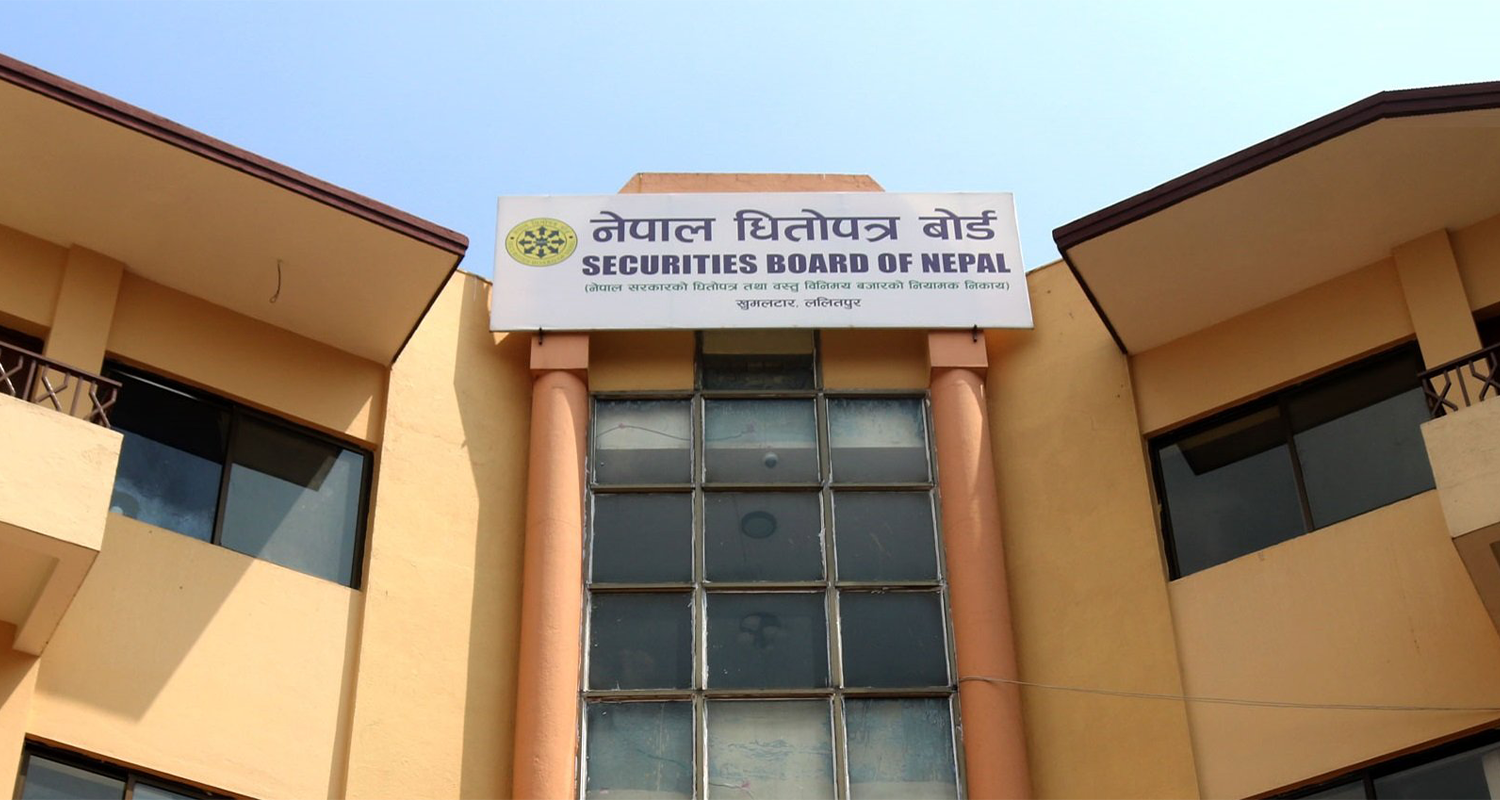
SEBON Introduces New IPO Criteria, These Are the Conditions Companies Must Fulfill
The Nepal Securities Board (SEBON) has prepared a draft directive with new criteria for organized institutions seeking to make public offerings. The draft bars net worth per share from falling below par value, prohibits artificial profits or manipulation in financial statements, and tightens institutional governance and use of raised capital.
Kathmandu — From now on, the net worth per share of an institution making an initial public offering (IPO) must not be lower than its par value. The Nepal Securities Board (SEBON) has prepared a draft of the 'General Eligibility Relating to Public Offering Directive, 2083' with new criteria for organized institutions seeking to issue primary shares and other securities to the general public.
According to the draft, an organized institution seeking a public offering must have conducted business based on assets used for achieving its main objective and must have published audited financial statements for the last three years along with annual reports.
The directive places special emphasis on financial discipline. It includes the following provisions:
- The net worth per share of the institution must not, under any circumstances, fall below par value
- Income must be earned from genuine business transactions
- No artificial profit or manipulation of any kind shall be made in the financial statements
- The institution's capital structure and debt repayment capacity must be balanced
- If there is disputed tax liability, provisioning must be mandatorily made in accordance with prevailing auditing standards
With the objective of making the capital market fair, orderly, risk-based and reliable while protecting the interests of general investors, the Board has proposed this directive to broadly tighten financial health, institutional governance, operational preparedness and the use of funds raised from the offering.
Once this directive comes into force, it will be mandatorily applicable to all organized institutions seeking to issue securities to the general public and those converting into public companies to make public offerings.
The Board has set prohibited conditions barring public offering permission for institutions that are in the process of liquidation or dissolution, whose business operations are seriously obstructed, where the auditor has expressed serious doubt about business continuity, and where six months have not elapsed since removal from the blacklist.
Likewise, institutions where individuals convicted and having served sentences for securities fraud, corruption, money laundering, financial embezzlement or other serious economic offenses have not completed three years since serving their sentence and are involved as promoters, directors or in key management shall also be deemed ineligible for public offering.
The directive also places special emphasis on the institutional governance of companies. According to the draft, an organized institution must have a competent board of directors and independent directors, as well as subject committees such as audit, risk management, remuneration and project monitoring.
The institution's promoter shareholders, directors and chief executive officer must submit appropriate and qualified declarations in the format prescribed by the Board.
Similarly, the appointment of a chief executive officer, chief financial officer, company secretary and compliance officer has been made mandatory in the company, while a code of conduct and conflict of interest management policy must be applied for directors and employees.
In terms of business and operational preparedness, institutions are required to implement written policies and Standard Operating Procedures (SOPs) for their main business activities.
The institution must have adequate skilled manpower, a secure information technology system, a Business Continuity Plan (BCP) and a Disaster Recovery Plan (DR Plan), and must mandatorily conduct regular data backup and recovery testing.
Regarding the prospectus and flow of information, the Board has demanded full transparency. All matters mentioned in the prospectus must be true and factual, and the board of directors shall be collectively responsible for it.
The issue and sales manager, auditor, legal advisor, independent engineer and valuer must complete due diligence independently and impartially within their scope of work and submit certificates. All evidence, analyses and working papers related to due diligence must be kept secure for at least ten years.
The Board has put forward strict conditions to ensure proper utilization of capital raised from the public offering. The raised amount may be spent only for the approved objectives mentioned in the prospectus, and a separate bank account must be mandatorily operated for that purpose.
The amount cannot be used for regular operating expenses or unrelated investments. Quarterly and annual reports on the use of funds must be submitted to the Board and also published on the website.