
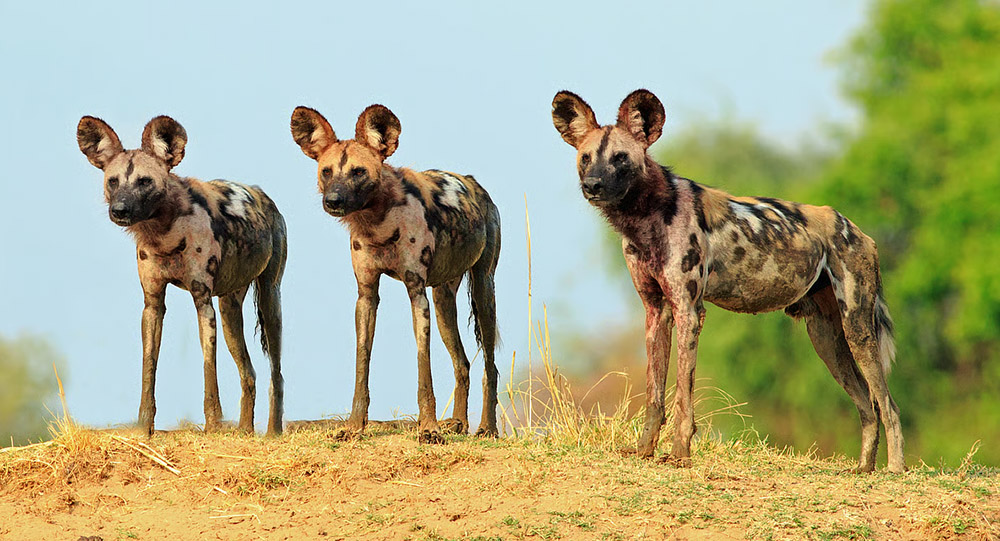
Record-breaking 4,000-kilometer journey of African wild dogs
Three African wild dogs in Zambia traveled nearly 4,000 kilometers over eight months, the longest distance ever recorded for an African terrestrial mammal searching for a mate. The study highlights the need for wildlife corridors beyond protected areas.
Kathmandu — A pack of African wild dogs has made a record-breaking journey of nearly 4,000 kilometers in Zambia. According to scientists, this is the longest journey ever undertaken by any African terrestrial mammal in search of a mate.
During the study, three male wild dogs fitted with GPS collars traveled through remote and difficult terrain in Zambia over eight months. Although the straight-line distance was about 260 miles or 418 kilometers, due to winding forest paths and various obstacles, they covered a total of nearly 4,000 kilometers. They even passed through busy urban and industrial areas, including the capital Lusaka.
African wild dogs are among Africa's rarest predators. It is estimated that only about 6,000 remain in the wild. These dogs live in packs and hunt collectively. Because they cannot breed within their natal pack, they typically leave at two to three years of age to find a new mate in another area. Such movement is called 'dispersal', which is different from migration, where animals move seasonally in search of food and habitat.
During the study, three female wild dogs also made a similar journey. However, after one of them was caught in an illegal snare, the others stopped. While the three males completed their journey, two of the three females died. This shows that illegal hunting and snares remain a major threat to wild dogs.
According to researchers, wild dogs are capable of traveling long distances even through areas fragmented by human settlements, roads, farms, and other structures. This suggests that various wild dog populations in eastern and southern Africa may be more interconnected than conservationists had estimated.
The study, published in the journal 'Ecology', emphasizes the need to develop natural corridors for wildlife movement outside protected areas as well. Researchers say that separate protected areas alone are not enough for wild dogs, elephants, and other wildlife, and that wildlife corridors connecting these areas are essential.
The lead author of the study, Scott Creel, said the study offers hope for wildlife conservation. According to him, apart from areas completely isolated by barriers, major wild dog populations in eastern and southern Africa may potentially be connected to one another. However, he noted that illegal hunting and human-made barriers still pose a major challenge to their conservation.