
PM Shah's India Visit Yields New Agreements, But Implementation Remains the Test
Prime Minister Balendra Shah's first state visit to India produced agreements on development assistance, infrastructure, trade transit, air connectivity, railways and energy. India announced Rs240 billion in development assistance, but the true value of the visit will depend on implementation and the benefits these commitments deliver to Nepal.
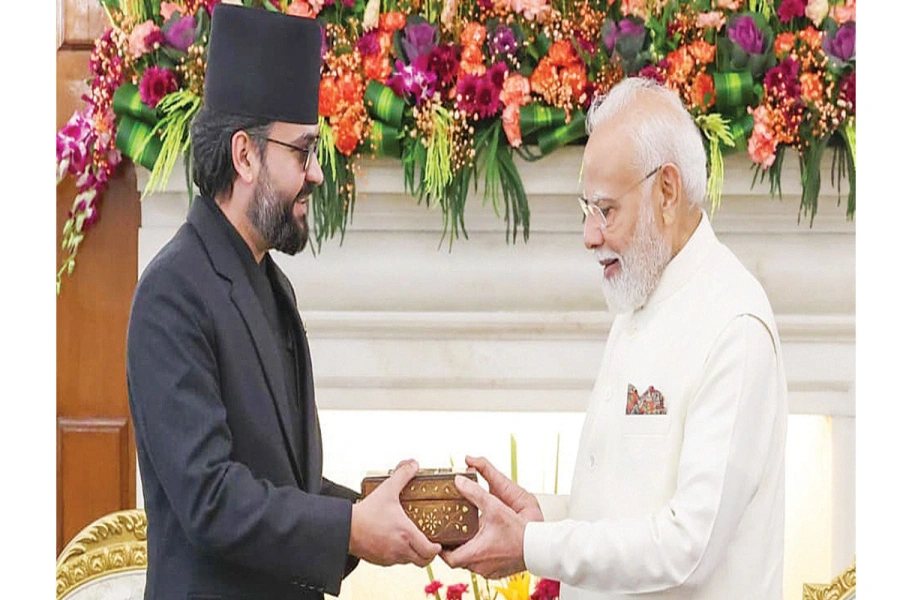
KATHMANDU, Nov 24 — Prime Minister Balendra Shah returned to Kathmandu on Monday after a two-day state visit to India, his first foreign trip since taking office. Invited by Indian Prime Minister Narendra Modi, Shah arrived in New Delhi on Sunday for talks focused on bilateral relations and economic cooperation.
The visit produced agreements on development assistance, infrastructure, trade transit, air connectivity, railways and energy. Their value, however, will depend on implementation and the benefits they deliver to Nepal.
Development Assistance: Grants vs. Loans
India announced Rs240 billion in development assistance, comprising Rs56 billion in grants and Rs184 billion in Indian rupee loans for energy projects. It also pledged grants for reconstruction in the Bhotekoshi and Trishuli river basins following floods, along with support for new infrastructure.
Nepal must distinguish between grants and loans when assessing the package. The government needs details on interest rates, repayment periods and the expected returns from projects financed through borrowing. Assistance should strengthen production, create jobs and expand the country's economic capacity.
Port Access and Trade Connectivity
India also agreed to provide Nepal access to Deendayal Port in Gujarat. Access to Paradip Port in Odisha could follow once the required infrastructure is developed. Additional ports could give Nepal more options for overseas trade, but their usefulness will depend on transport costs, transit time and customs procedures.
An agreement to operate the Kathmandu-Bhairahawa-Lucknow air route in both directions could improve connectivity and support commercial operations at Gautam Buddha International Airport. Nepal's demand for additional international entry routes, however, remains unresolved. Further negotiations will be needed to secure them.
Railway Cooperation
Railway cooperation featured prominently in the talks. The two prime ministers virtually inaugurated the Ayodhya-Janakpur rail service, which covers about 604 kilometres through Jayanagar, Madhubani, Sitamarhi, Raxaul, Narkatiaganj and Gorakhpur.
They also discussed the Raxaul-Kathmandu electric railway, for which the field location survey has been completed, and India's support for Nepal's east-west railway. Yet the Janakpur-Bardibas extension remains unfinished, 16 years after the two countries signed an agreement to build it. Completing existing commitments should take priority alongside new plans.
Energy and Hydropower
In the energy sector, the leaders laid the foundation stone for the 669 MW Lower Arun Hydropower Project. They agreed to expedite the detailed project report for the Pancheshwar Multipurpose Project and advance studies on the Saptakoshi and Sunkoshi multipurpose projects.
These projects could support hydropower generation, irrigation and flood management. Pancheshwar, however, has remained stalled for years. Nepal needs an agreement that addresses water sharing, irrigation, flood control and environmental concerns, alongside electricity generation.
Eight MoUs Signed
The two countries also signed eight memorandums of understanding covering:
- Agricultural industrial parks
- An Indian Institute of Technology branch in Nepal
- Police and administrative capacity building
- Healthcare
- Ayurveda
- Satellite communication
- Urban development
Each agreement will need a budget, timeline and responsible agency to move beyond the signing ceremony.
Border Dispute
The border dispute was also discussed. The two prime ministers noted progress in maintaining border pillars and conducting joint inspections, and instructed their foreign secretaries to address outstanding issues. This creates room for further dialogue, but disputes involving Kalapani, Lipulekh and Limpiyadhura require political commitment and a clear process. Questions of sovereignty and territorial integrity cannot be left to routine technical discussions.
India is Nepal's major trading and development partner. Geography and longstanding social and cultural ties make cooperation natural, but Nepal's interests are best served by ensuring that every agreement is transparent, costed and implemented on schedule.