
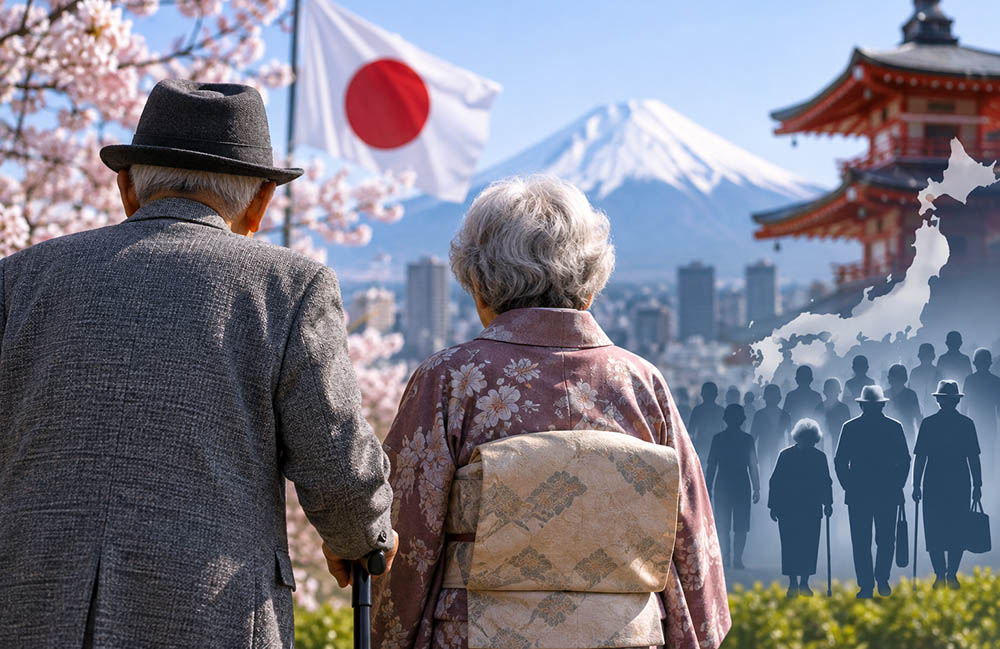
Number of people over 100 years old in Japan exceeds one lakh for the first time
For the first time, the number of people aged 100 or above in Japan has surpassed one lakh. According to data released by the Ministry of Health, the number of such people has reached 1,07,677, with women making up about 88 percent. Meanwhile, Japan is also grappling with the serious challenge of a declining population.
Kathmandu. The number of people aged 100 years or above in Japan has exceeded one lakh for the first time.
According to data released on Tuesday by Japan's Ministry of Health, the number of people aged at least 100 in the country has now reached 1,07,677.
Women overwhelmingly outnumber men in this group. Among those over 100, there are about 94,300 women and about 13,400 men. That means women account for about 88 percent of this age group. Compared to last year, the number of people aged 100 or above has increased by about 8,000. As Japan's elderly population continues to grow, the number of people living beyond 100 years is also increasing every year.
Healthy diet, a habit of staying active in daily life, easy access to healthcare, and regular health check-ups are said to be important factors behind the long life expectancy of Japanese people.
Lifestyle is also said to play a role in why women live longer than men in Japan. Men of that generation had higher rates of smoking and alcohol consumption. They were also more involved in industrial and physically demanding work, which is believed to have had long-term health effects. As people age, social relationships also appear to make a difference. While many men tended to become socially isolated after retirement or the death of a spouse, women remained relatively more connected to family and community. This is said to have had a positive impact on their social and mental health.
Similarly, the impact of World War II is also linked to the gender structure of Japan's current elderly population. During the war, about 2.3 million Japanese soldiers were killed, most of them men. After the death of a large number of men, the proportion of women in that generation increased.
But even as the number of long-lived people continues to rise, Japan is facing another major challenge: a declining population. Japan's population, which reached about 12.80 crore in 2008, is projected to decline sharply in the coming decade.
According to government estimates, Japan's population could fall to about 8.70 crore by 2070. This means the country's population could decline by more than 4 crore in a few decades.
Currently, for every one child born in Japan, about two people die. A declining birth rate and a growing elderly population have directly affected the country's working-age group. As the number of working people decreases, the burden of social security, healthcare, and other government spending for elderly citizens continues to rise.
The Japanese government has long introduced various programs and incentives to raise the birth rate. But despite those efforts, the decline in population has not stopped.
Over the five years from 2020 to 2025, Japan's population fell by about 3.1 million. The population, which was about 12.61 crore in 2020, had fallen to about 12.30 crore in 2025.
Sources say this is the largest population decline since the census began in 1920. According to census data, the problem has spread across most parts of the country. Of Japan's 47 prefectures, the population declined in 45 prefectures in 2025, while it increased in only two prefectures.
Thus, on one hand, Japan appears as a country where the number of people living beyond 100 years is increasing, while on the other, it is battling the challenge of a declining birth rate and shrinking population. The growing share of the elderly population and the shrinking working-age workforce are seen as long-term challenges for Japan's social security and economy.