
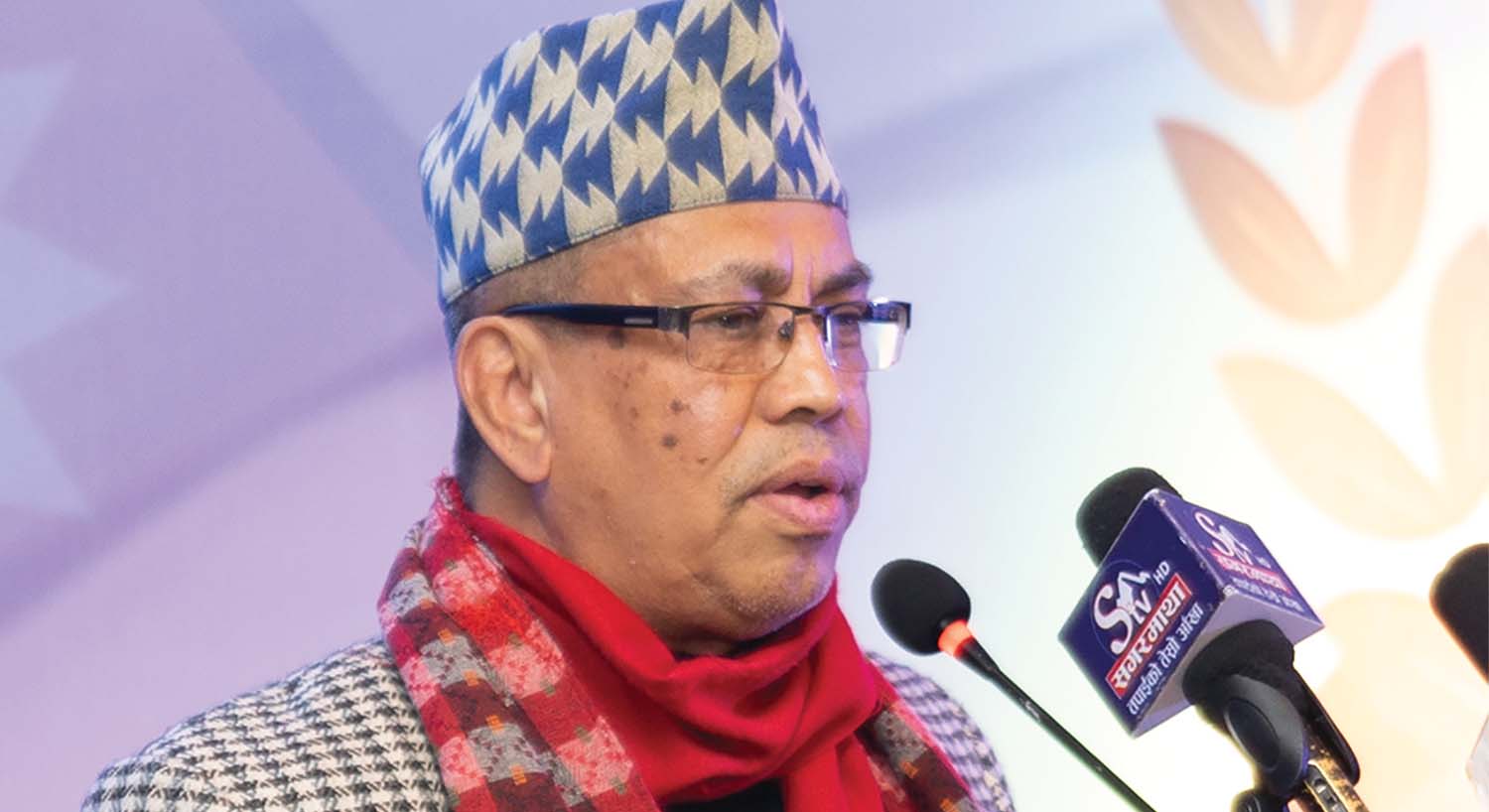
Not Retrenchment but a Test of Institutional Reform in Civil Service: Prakash Rayamajhi
A new draft civil service law proposing mandatory retirement for employees at 55 years of age or 30 years of service has sparked serious debate. An estimated 10,000 employees could be affected. According to Prakash Rayamajhi, this is not retrenchment but a test of institutional reform.
The capacity of the state is not measured solely by the popularity of the prime minister, ministers, or the government. It is demonstrated by how effectively government policies are implemented, how long citizens must wait for services, how quickly the state machinery responds during crises, and how transparent the decision-making process is.
Therefore, any change in the civil service should not be considered merely a matter of routine employee management. It is a question linked to the backbone of state operations.
This is why the proposed provision in the new draft of the Federal Civil Service Act has sparked serious debate. According to public disclosures, a provision has been proposed to retire employees who have reached the age of 55 or completed 30 years of service, on a one-time basis.
If the draft becomes law, a large number of employees could exit service at once. It is estimated that around 10,000 employees could be affected, and a significant number of high-level employees are also expected to retire. But the main question here is not just how many employees are reduced. The question is: what is the value of the institutional experience the state will lose?
Administrative reform does not mean displacing experienced human resources
The work of civil servants is not limited to moving files, drafting notes, or running offices. Employees who have been in government service for decades have acquired deep institutional knowledge about the practical application of laws, policy implementation, inter-ministerial coordination, international relations, the budget system, development projects, disaster management, and the complex processes of the state.
The individual capacity of some employees may be weak. Some may not have delivered expected results. But the solution is not to remove everyone based on a single standard. Good administration must have the ability to distinguish between the bad and the good.
If the first tool of administrative reform is to retire a large number of employees at once, it may create vacancies in the short term, but it is not certain that this will automatically increase administrative capacity. The institutional memory of the state is not built in a few months. It is built through years of work, experience, and practice.
Another question raised by the 55-year and 30-year criteria
The legal and judicial aspects of the currently proposed issue are equally important.
According to public disclosures, questions have been raised even within the Ministry of Law about the constitutional and legal aspects of this provision.
The existing Civil Service Act also has legal provisions that provide certain protections against adverse changes to the terms of service at the time of appointment.
This does not mean that the proposed provision is impossible. But when making a change with such a large impact, all aspects—its constitutionality, legal validity, the principle of equality, the responsibility of the state, and the terms of service of employees—must be clearly examined.
If a difference of one day creates a situation where one person retires at 55 and another serves until 60, the question naturally arises: what is the justifiable basis for that?
The power to make laws rests with the government and parliament. But it is also the responsibility of the state to ensure that the impact of the law is not unequal on anyone.
Filling vacant posts alone does not improve administration
It can also be argued that after a large number of employees retire, opportunities will open up for the new generation.
The need to bring the younger generation into government service, bring in human resources with new skills, and modernize the organization is real.
But merely pushing out one generation and bringing in another does not modernize the administration. Today's administration needs human resources that understand digital skills, evidence-based policymaking, project management, information technology, economic analysis, international cooperation, cybersecurity, environmental risks, and modern public service management. For that, the old structure must be connected with new capacity.
In other words, what is needed is not competition between experience and the new generation, but knowledge transfer. If a large number of employees are removed at once without creating a structure to transfer the experience of senior employees to the new generation, the state will not only lose experienced human resources but new employees may also lose the opportunity to learn.