
Nepal's PM Warns UN: Himalayan Climate Disaster Threatens Global Stability
Nepal's Prime Minister addressed the UN General Assembly, describing catastrophic floods that killed at least 1,400 people and left over 6,000 missing. He called for urgent global climate action, noting Nepal contributes less than 0.1% of global emissions yet faces recovery costs of approximately 10% of GDP.
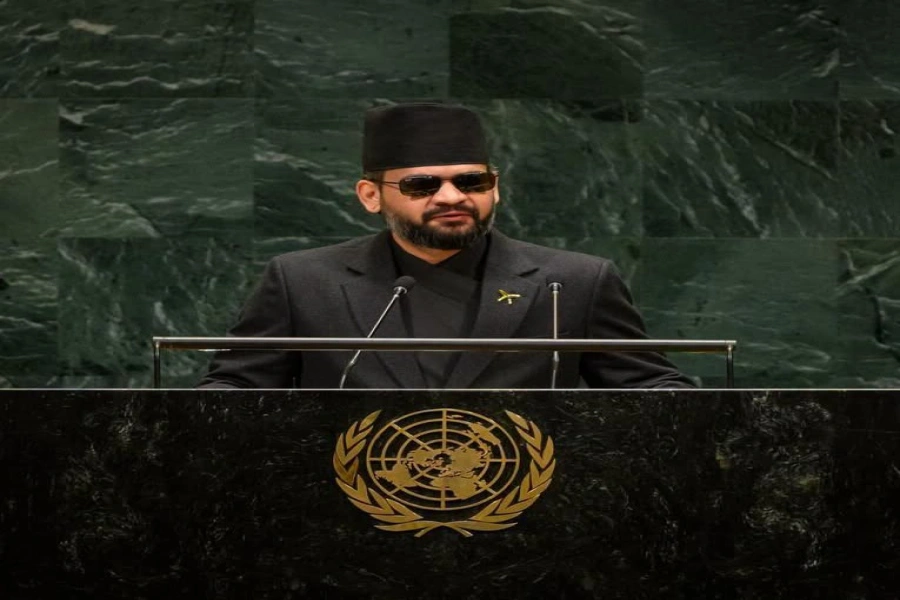
Nepal's Prime Minister delivered an urgent warning to the UN General Assembly today, describing a climate catastrophe of "epic proportions" that has devastated his nation and demanding that world leaders finally translate climate warnings into action.
Speaking before assembled heads of state, the Prime Minister recounted the Bhotekoshi-Trishuli disaster that struck Nepal's mountain communities just four weeks ago — a catastrophic flash flood event that many have called a "Himalayan Tsunami."
"I wish I could stand here today simply to speak about development, democracy, peace and the hopes of a young nation," he told delegates. "Instead, I must speak about death and destruction of epic proportions."
The human toll is staggering:
- At least 1,400 confirmed deaths
- Over 6,000 people still missing
- Communities searching through mud, rocks and water for bodies that may never be recovered
- Bridges, roads, schools, homes and livelihoods swept away in minutes
The Prime Minister noted that the disaster has interrupted Nepal's steady progress toward achieving the Sustainable Development Goals, and that rapid assessments peg physical recovery needs at approximately 10 percent of GDP.
A Warning Ignored
The Prime Minister reminded delegates that nearly three years ago, the UN Secretary-General stood in the shadow of Mount Everest and warned humanity about the "madness of an impending climate disaster."
"That cry from the rooftop of the world was not heard loudly enough," he said. "Scientists around the world heard it. They repeated it with evidence. But we, the political leaders of the world, have been negligent in translating those warnings into action at the speed and scale that vulnerable people require."
The Science of Himalayan Instability
The Prime Minister explained the mechanisms driving Nepal's vulnerability:
- A warming climate is destabilizing fragile Himalayan ecology
- Melting permafrost is fracturing mountain slopes beneath glaciers
- Ice-rock avalanches, floods, landslides and cascading hazards are accelerating
The resulting devastation affected both sides of the Nepal-China border, with floodwaters continuing downstream toward India.
"Climate change does not recognize borders," he emphasized. "Glaciers and floods do not travel with a visa stamped on passports."
Gratitude and the Road Ahead
The Prime Minister expressed Nepal's deep gratitude to those who provided assistance, including:
- India and China, which offered prompt and generous assistance
- Other friendly countries
- The United Nations system
- Humanitarian agencies and philanthropies
- People around the world who stood with Nepal
"To all of them, I say: thank you on behalf of the grateful people of Nepal," he said.
Climate Justice and Development Emergency
The Prime Minister emphasized the stark inequity at the heart of Nepal's climate crisis. Nepal contributes less than 0.1 percent of global greenhouse-gas emissions, yet faces disproportionate consequences.
"We did not create this crisis. Yet we are paying a colossal price for it," he said. "Our glaciers are retreating. Our mountain slopes are becoming unstable. Our rivers are becoming less predictable."
He characterized the situation as both a humanitarian event and a development emergency, noting that climate disasters:
- Destroy roads, bridges, schools, homes, farms and livelihoods
- Destroy clean energy infrastructure needed to fuel Nepal's future
- Force a poor country to borrow money to repair damage it did not cause
The Prime Minister concluded by calling for global solidarity rather than blame, urging world leaders to act on climate change with the urgency that vulnerable nations require.