
Nepal's PM Balendra Shah Faces Accountability Questions as Monsoon Session Ends
Prime Minister Balendra (Balen) Shah's absence from Parliament and the opposition's anger over it defined Nepal's monsoon session, which ended October 2, 2026. Despite leading a government just two seats short of a two-thirds majority, Shah avoided facing questions on controversial border remarks and budget disputes, raising concerns about parliamentary accountability.
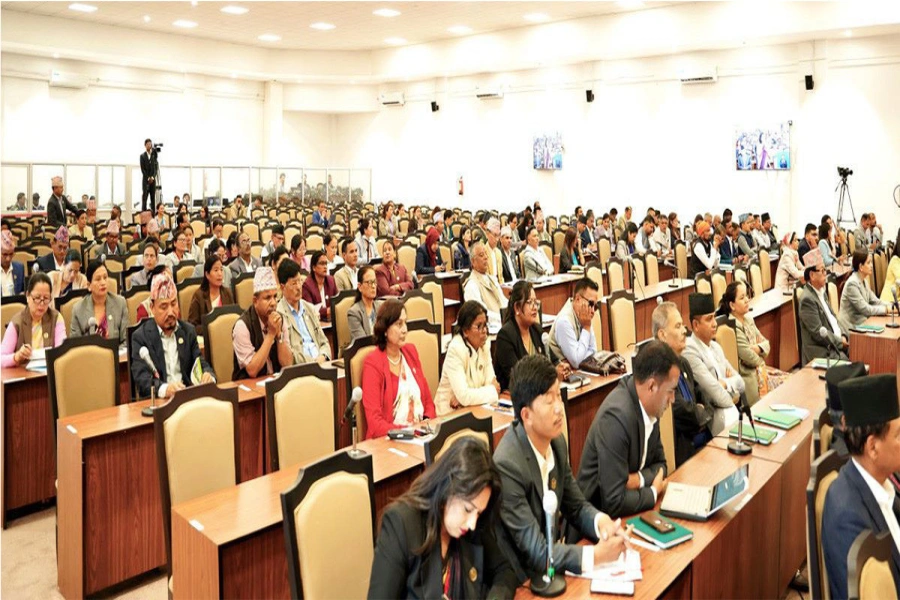
KATHMANDU, Oct 3 — As the Federal Parliament's monsoon session formally ended at midnight on Friday, October 2, Prime Minister Balendra (Balen) Shah's absence from Parliament and the opposition's anger over it emerged as the defining features of the session. Leading a government just two seats short of a two-thirds majority, Prime Minister Shah has faced questions over his accountability to Parliament, where expectations are particularly high for a prime minister with such a strong majority.
The second monsoon session since the formation of the new government began on May 11, 2026, and ended Friday. During the session, the House of Representatives (HoR) held 68 meetings and the National Assembly held 51. Although bills were registered and the budget process moved forward, questions remain over the prime minister's accountability and Parliament's oversight role.
From the beginning of the session, opposition parties warned that they would obstruct Parliament unless the prime minister appeared and answered their questions. They even likened his style to that of an "emperor of a separate island." The House was further disrupted after Shah unexpectedly appeared during question hour on May 31 and made controversial remarks about the border issue.
Shah said Nepal, too, had encroached on Indian territory in many places, not just India on Nepali territory. He said, "You may find one thing surprising. I also learned this only after becoming prime minister. It turns out that India has not only encroached on Nepal's land, Nepal has also encroached on Indian land at many places. We intend to resolve this by sitting together as friends."
The opposition MPs demanded that Shah clarify which areas Nepal had encroached upon in India, but he did not provide an answer. The opposition itself was divided over the issue. "The opposition was divided over whether to demand an apology from the prime minister or understand his 'intention,'" officials at the Federal Parliament Secretariat said.
Related story
With FSFN on board, Oli govt has two-thirds majority
The dispute directly affected budget discussions, with a crucial period consumed by sloganeering. While demanding answers from Shah, the opposition also called for Finance Minister Swarnim Wagle's resignation. Allegations were raised that tax rates, particularly those concerning electric vehicles and customs duties, had been leaked to potential business groups before the economic bill was made public. The issue of a large number of vehicles being cleared through customs before the budget speech, allegedly causing revenue losses to the state, was also raised in Parliament.
The opposition maintained its stance but eventually allowed Parliament to function after becoming frustrated. Parliament therefore moved ahead without Shah having to face the questions, while the issue surrounding the finance minister also gradually faded. Analysts say this can be viewed as a weakness from the perspective of accountability.
Shah later responded to questions raised against his border remarks not in Parliament but at a party platform. The most notable contradiction was precisely this. Shah responded to the questions raised by the opposition in Parliament from the venue of the Rastriya Swatantra Party (RSP)'s First General Convention in Chitwan. The RSP's first historic general convention was held in Bharatpur, Chitwan, from June 21 to June 23, 2026, with the inaugural ceremony on June 21.
According to analysts, prioritizing a party platform over Parliament reinforced the opposition's criticism. Toward the end of the session, Shah and RSP Chairman Rabi Lamichhane attended a House of Representatives meeting for only around 20 minutes before leaving. This also sparked debate over the influence of the party president in running the government.
Meanwhile, Home Affairs Minister Sudan Gurung was removed from office just 26 days after the government was formed, while Labor, Employment and Social Security Minister