
Nepal's Parliament Debates Demonetization Ahead of Provincial and Local Elections
Lawmakers from both the ruling and opposition benches have urged Nepal's government to withdraw Rs 500 and Rs 1,000 notes to bring undeclared wealth into the banking system. Nepal Rastra Bank and Finance Minister Dr Swarnim Wagle have rejected the idea, while economists warn that demonetization carries significant risks for remittances and financial confidence.
KATHMANDU, Oct 1 — A demand in Parliament to withdraw Rs 500 and Rs 1,000 notes from circulation has revived debate over whether Nepal could resort to demonetization to bring undeclared wealth into the banking system, particularly ahead of the upcoming provincial and local elections.
Lawmakers from both the ruling side and the opposition, the Nepal Communist Party, have urged the government to consider withdrawing high denomination notes. Nepal Rastra Bank officials, however, say current conditions do not warrant such a move. Finance Minister Dr Swarnim Wagle has also said the government has no plan for demonetization and does not consider it appropriate.
The government is preparing to hold provincial and local elections in February.
During Wednesday's House of Representatives meeting, Rastriya Swatantra Party lawmaker Yagya Mani Neupane argued that demonetization was necessary to bring black money accumulated over the past 35 years into the formal banking system.
Citing India's experience, he proposed withdrawing high denomination notes and, if necessary, issuing new lower denomination currency. Nepal Communist Party Chief Whip Yubaraj Dulal backed the proposal, saying his party would fully support such a move and could submit the signatures of all its lawmakers if required.
The demand has also fuelled speculation that demonetization could be considered as a way to curb the use of undeclared cash during elections.
According to Nepal Rastra Bank data, Rs 500 and Rs 1,000 notes account for about 71 percent of the total value of currency in circulation. The debate has resurfaced repeatedly since India withdrew its Rs 500 and Rs 1,000 notes on November 8, 2016.
Related story
- IC demonetization may have upped gold smuggling
Former finance minister Surendra Pandey had also suggested in 2018 that Nepal should restrict high denomination notes and give greater priority to Rs 100 notes.
Sources said the interim government led by Sushila Karki, following the Gen Z movement, was similarly advised to consider demonetization before the House of Representatives election. The government sought Nepal Rastra Bank's opinion but abandoned the idea after the central bank concluded that the volume of black money held in cash was not as large as widely believed.
Central bank officials maintain that demonetization is unnecessary now, although sources citing ministers say the possibility of such a step before the provincial and local elections cannot be completely ruled out.
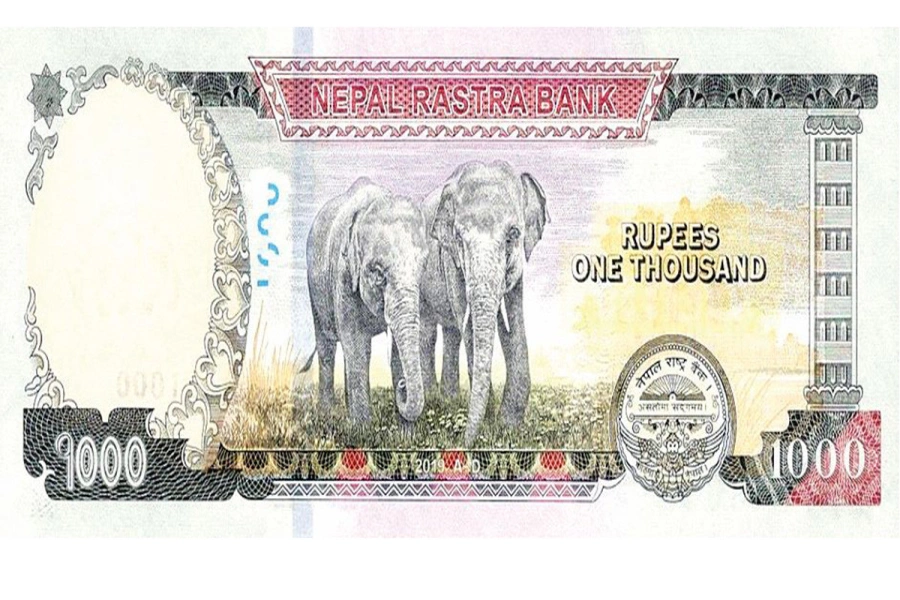
The debate comes as Nepal Rastra Bank has just introduced a new Rs 1,000 note under its "Series 2025", starting September 24. The series refers to the note's design year. Existing Rs 1,000 notes remain legal tender. The new note contains upgraded security features, including a security thread that changes from red to green when viewed from different angles.
Economists caution that abruptly withdrawing high denomination notes could carry significant risks for Nepal.
Black money is not necessarily stored as cash. Undeclared wealth can be held in land, gold, houses, shares, cooperatives and foreign assets, none of which would be directly affected by demonetization.
India's experience illustrates the limitations. The Rs 500 and Rs 1,000 notes withdrawn in 2016 represented about 86 percent of the value of currency then in circulation. Although the measure was intended partly to combat black money, about 99.3 percent of the withdrawn currency eventually returned to banks, according to the Reserve Bank of India. The outcome raised questions about the effectiveness of demonetization in eliminating undeclared wealth.
For Nepal, the risks could extend to remittances and confidence in the financial system. Nepal Rastra Bank's annual report shows the country received more than Rs 2.363 trillion in remittances during the current fiscal year. Economists warn that an abrupt currency withdrawal could undermine public confidence in banks and potentially encourage some transactions to shift away from the formal financial system.