
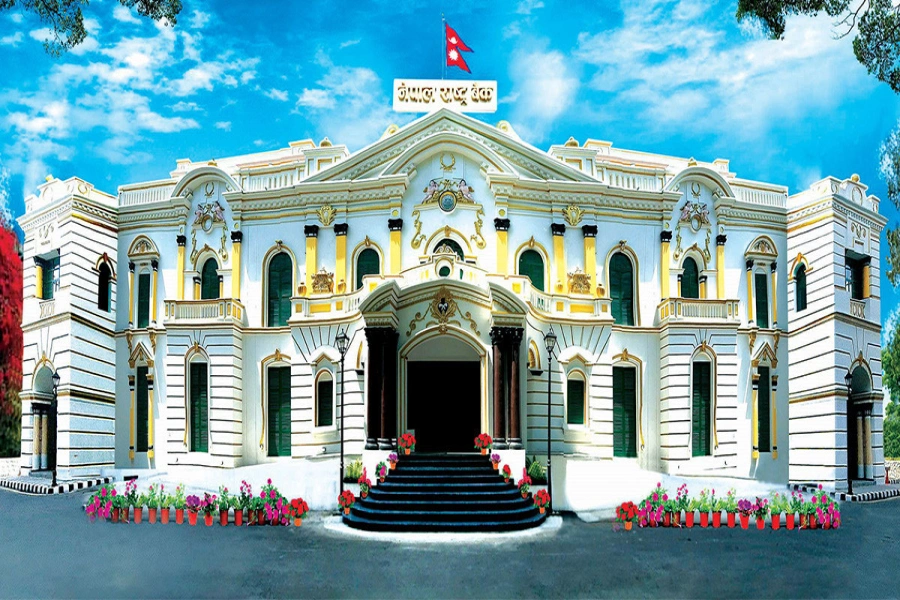
Nepal House Finance Committee Passes NRB Bill Report, Cuts Governor's Term to Three Years
The House of Representatives Finance Committee has unanimously approved a report on the Nepal Rastra Bank bill, reducing the governor's term from five to three years and introducing stricter eligibility rules. The report also mandates monetary policy publication on the first day of Shrawan and expands the central bank's regulatory scope to include CIT, EPF, and SSF.
KATHMANDU, Sept 16 — The House of Representatives Finance Committee has unanimously passed the report on the bill related to Nepal Rastra Bank (NRB), introducing several significant changes to the proposed legislation.
The committee, which met on Wednesday, shortened the terms of the NRB governor, deputy governors, and board members from the existing five years to three years. It also allowed them to be reappointed for an additional two years based on their performance.
The committee further revised and streamlined the objectives of Nepal Rastra Bank and updated the eligibility and experience requirements for the governor, deputy governors, and independent board members. The report makes it mandatory to appoint at least one woman as an independent board member.
To address conflicts of interest, incumbent officials of commercial banks and financial institutions, as well as chief executive officers who have left such positions less than two years earlier, will be barred from becoming board members. This introduces a two-year cooling-off period.
Similarly, anyone holding more than 0.5 percent shares in a commercial bank or financial institution will be ineligible to become a Nepal Rastra Bank board member.
The committee has also set a fixed date for the central bank to formulate, announce, and publish its monetary policy. Under the report, monetary policy must be issued on the first day of Shrawan every year.
The provision under Section 106(c), which allows the government to issue directives on matters related to currency, banking, and finance, has been retained.
The committee also directed the concerned government minister to immediately initiate the process of amending Section 18 of the Banks and Financial Institutions Act, 2017, to address problems arising from the penalty provision under Section 100(2)(a) of the Nepal Rastra Bank Act.
The committee has expanded the proposed scope of Nepal Rastra Bank's regulation and supervision to include the Citizen Investment Trust, Employees Provident Fund, and Social Security Fund.
The report also requires the Nepal Rastra Bank Management Committee to meet at least twice a month.
Major provisions endorsed by the Finance Committee:
- Governor, deputy governors, and board members' terms reduced from five years to three years, with possible two-year extension based on performance.
- Mandatory appointment of at least one woman as an independent board member.
- Two-year cooling-off period for commercial bank officials and CEOs before joining the NRB board.
- Shareholding limit of 0.5 percent for NRB board membership.
- Monetary policy must be published on the first day of Shrawan annually.
- Section 106(c) retained, allowing government directives on currency, banking, and finance.
- Direction to amend Section 18 of the Banks and Financial Institutions Act, 2017.
- Regulatory scope expanded to include CIT, EPF, and SSF.
- NRB Management Committee must meet at least twice a month.