
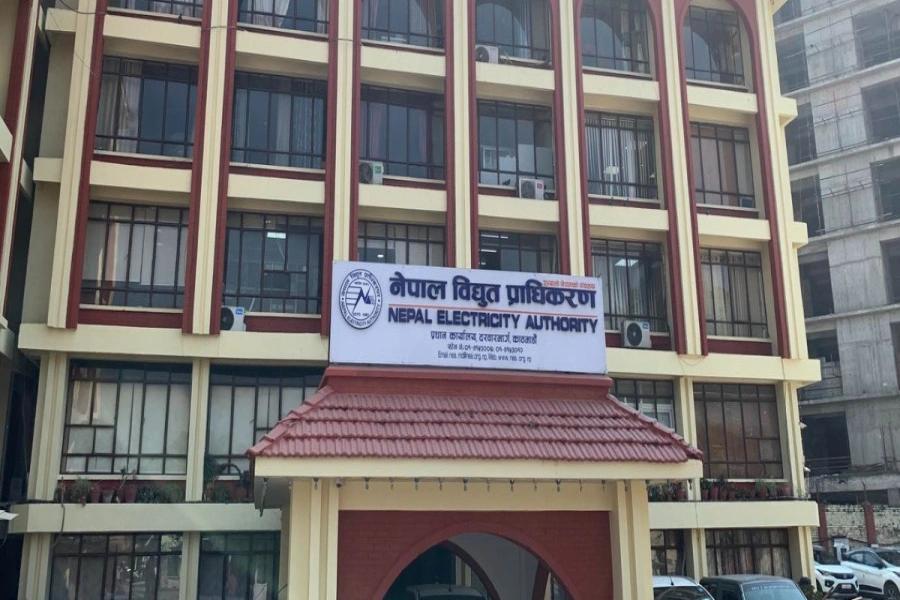
Nepal Electricity Authority Extends Deadlines for 27 Hydropower Projects Totaling 540 MW
The Nepal Electricity Authority (NEA) has granted deadline extensions to 27 hydropower projects with a combined capacity of 540.47 MW, providing relief to developers who have made genuine progress but missed their original Required Commercial Operation Dates (RCODs). The NEA has introduced a new four-tier classification system to assess projects based on physical progress, deadline status, and compliance with Power Purchase Agreement (PPA) obligations.
KATHMANDU, Oct 5 — The Nepal Electricity Authority (NEA) has extended the deadlines of 27 hydropower projects with a combined capacity of 540.47 MW, offering relief to developers whose projects are making genuine progress but failed to meet their original completion targets.
The deadline extension, formally known as an extension of the Required Commercial Operation Date (RCOD), follows the NEA's assessment of projects that had signed Power Purchase Agreements (PPAs) but could not complete construction within the scheduled timeframe. Energy entrepreneurs have long demanded such extensions, arguing that developers making genuine efforts should be given additional time while inactive promoters should be discouraged.
New Classification System
The NEA has introduced a new system to classify projects according to their physical progress, deadline status, and compliance with key obligations under their PPAs. The authority expects the system to make project management more transparent and accountable and help projects that are genuinely progressing move toward completion and connection to the national grid.
The NEA has categorized the projects into four groups based on physical progress, RCOD status, and the obligations developers are required to fulfill under their PPAs. The NEA board meeting held in mid-July decided to classify the projects based on clear criteria for the first time.
- Group A: Projects whose deadline has not expired and that have met key requirements such as securing production licenses, arranging finances, and managing land.
- Group B: Projects delayed mainly due to NEA's transmission line or substation works, as well as expired projects with more than 25 percent construction progress. These will be closely monitored by the Electricity Trading Department.
- Group C: Projects that failed to meet major obligations like licenses or financing on time, or those with less than 25 percent physical progress by the end of the deadline.
- Group D: Projects that have not fulfilled obligations or whose survey and production licenses have been cancelled after the deadline expired.
Progress Assessment Criteria
For hydropower projects, physical progress is judged by construction of core structures such as headworks, tunnels, and powerhouses. For solar projects, indicators include land management, panel purchase agreements, letters of credit, and installation of mounting structures.
The NEA stated that the process to extend the RCOD is moving forward for projects in Groups 'A' and 'B' that have submitted the required documents and evidence. According to the NEA, currently, 320 hydropower projects with a total capacity of 8,292 MW are in various stages of construction. Among them, there are 150 projects with a capacity of 4,491 MW in Group 'A' and 68 projects with a capacity of 1,420 MW in Group 'B'.
According to NEA, 30 projects with a combined capacity of about 1,292 MW have already applied for deadline extensions. Their construction progress ranges from as little as 4 percent to full completion.
Meanwhile, private sector energy producers have expressed satisfaction with the RCOD extension process initiated by the NEA—under the leadership of Minister for Energy, Water Resources and Irrigation Biraj Bhakta Shrestha—aimed at facilitating projects where construction is genuinely progressing.