
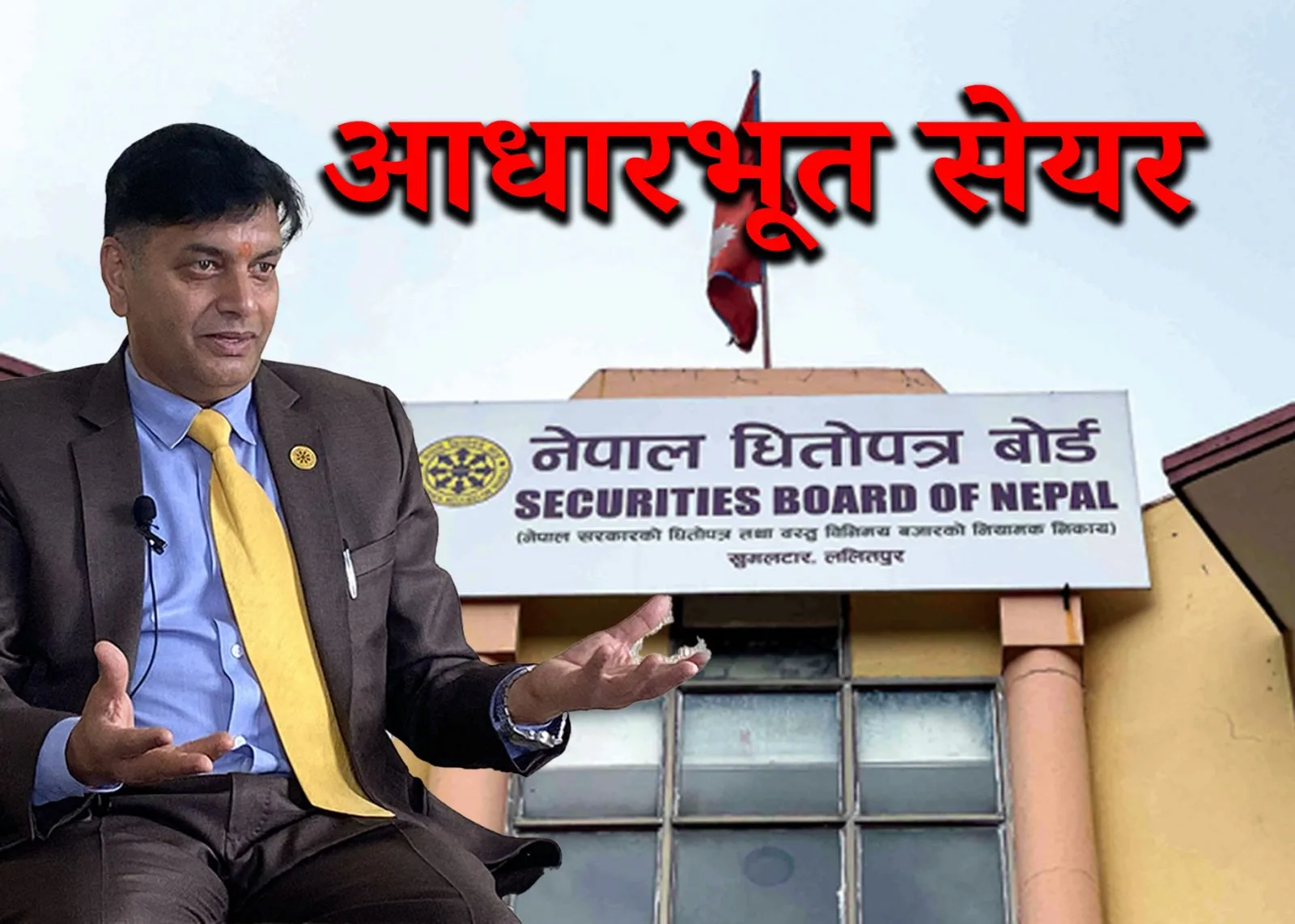
Investors Divided Over 5 Percent Rule for Basic Shareholders, SEBON Says It Applies to All
The Securities Board of Nepal (SEBON) issued a directive requiring basic shareholders to notify the company at least 15 days before selling 5 percent or more of their shares, sparking debate in the stock market. Investors are split on whether the rule applies only to promoters or to all. A SEBON source clarified that it applies to everyone.
The Securities Board of Nepal (SEBON) issued a directive on Bhadra 9 to listed companies. According to the directive, basic shareholders must notify the concerned company at least 15 days in advance before selling 5 percent or more of their shares. This decision has created a major stir in the stock market.
One group claims the rule applies only to promoters, while another argues it applies to all investors. The issue gained further traction after investor Tilak Koirala wrote on Facebook on Monday. He wrote, 'The 5 percent rule for basic shareholders does not apply to those who buy from the secondary market and trade regularly; don't spread unnecessary rumors.' However, many responded that it also applies to those who buy from the secondary market. Koirala told Arthasarokar that if not reconsidered, the market will weaken further.
Investor Jagannath Dhungel says the rule itself is unnecessary. He argues that since the rule only mentions a percentage for basic shareholders, anyone holding that percentage becomes a basic shareholder. 'If the rule does not clearly define basic shareholders, it applies to those who bought from the secondary market as well,' he said. He believes the rule does not mention promoters and the public. He said large investors are scared because they think the new rule applies to everyone. Dhungel also questioned what happens if, after notifying 15 days in advance, the price drops and the shares are not sold. 'As per the current rule, you must notify 15 days in advance. Then, if the price falls and you don't sell, what happens?' he asked. He fears this could be a way to depress the stock market.
The Company Act itself states that holding a minimum number of shares makes one a basic shareholder. Another investor, Hari Bahadur KC, says this fund has been introduced to benefit some and harm others. He said that prior information about shares coming to the market creates suspicion in trading. He believes the transitional-era Act does not cover everything, and some are trying to take advantage of this. He also said it is wrong to disclose the number of shares held during a company's general meeting, even if name, phone number, and email are provided. 'It has been 20 years since the Act came. Why only this issue now, when there are many other things?' he questioned. 'It has been 20 years since the Act. Why bring only this now? This has been brought to benefit some and harm others,' he said.
Former President of the Nepal Stock Brokers Association, Bharat Ranabhat, says rather than making rules arbitrarily, one must follow what is in the Act. He said such a provision would have a huge impact on the market. Since even small things affect the market, such directives or rules should be brought with clear definitions. 'If rules are defined right there, there will be no confusion. Regulators should not define rules arbitrarily,' he said. Investor Nanibabu Kharel says such things are coming only to confuse the market. He said instead of working to make the market orderly, unnecessary things are happening.
A high-level source at the Securities Board of Nepal said the provision is not just for promoter shareholders but for everyone. According to the board source, although there was a demand to make the rule only for promoters, it currently applies to all. 'There is talk in the market that this is only for promoters. But it is for everyone,' the source said. The source claimed that while it can be reviewed over time, for now it applies to all.