
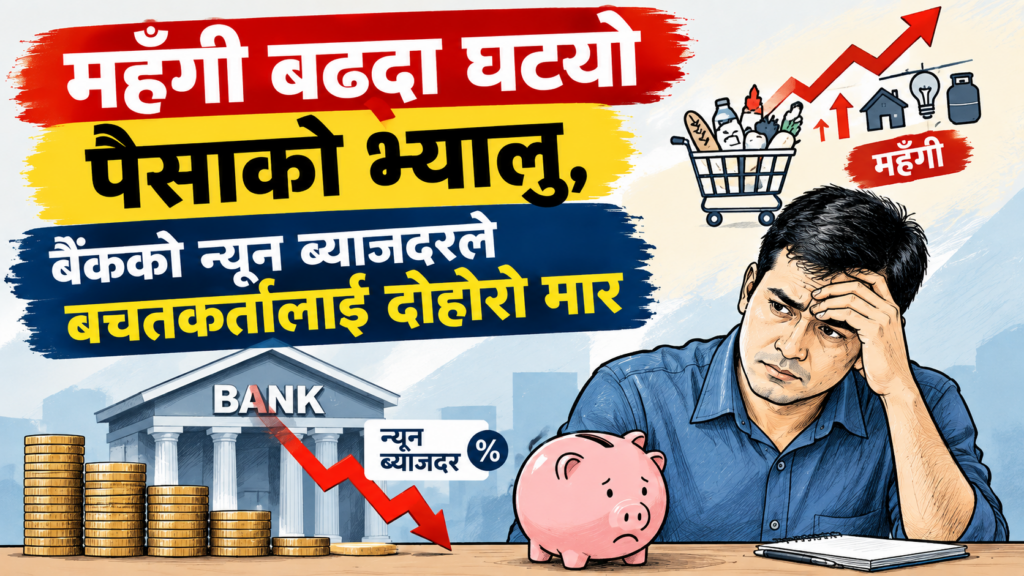
Inflation Hits 5.96% While Bank Deposit Rates Fall to 3.15%, Savers Bear Double Blow
Nepal's annual inflation has reached **5.96 percent**, eroding the purchasing power of the rupee. Meanwhile, the average deposit rate of commercial banks has fallen from **4.02 percent to 3.15 percent**, leaving savers squeezed by both rising prices and shrinking returns.
Kathmandu. By the end of Shrawan 2083, Nepal's annual consumer price inflation rate has risen to 5.96 percent. The direct implication is that prices of food staples and other daily consumables and services have surged rapidly in the market.
Inflation nearing 6 percent means the quantity of goods that 100 rupees can buy today will continue to shrink in the coming days — in other words, the purchasing power (value) of money itself is weakening. As prices of goods and services rise continuously, ordinary people must spend more just to consume the same amount as before. This has made daily household expenses significantly more expensive for those with regular incomes.
In sharp contrast, the average interest rate on deposits held at banks and financial institutions has declined markedly compared to Shrawan 2082 last year. During the review period, the average deposit rate of commercial banks fell from 4.02 percent to just 3.15 percent.
Similarly, deposit rates at other financial institutions have also declined:
- Development banks' average deposit rate fell from 4.67 percent to 3.51 percent
- Finance companies' average deposit rate fell from 5.85 percent to 4.18 percent
As a result, the returns earned by savers who deposit money in banks have shrunk to very low levels. With inflation driving up daily expenses while savings returns decline, ordinary people are being hit with a double blow.