
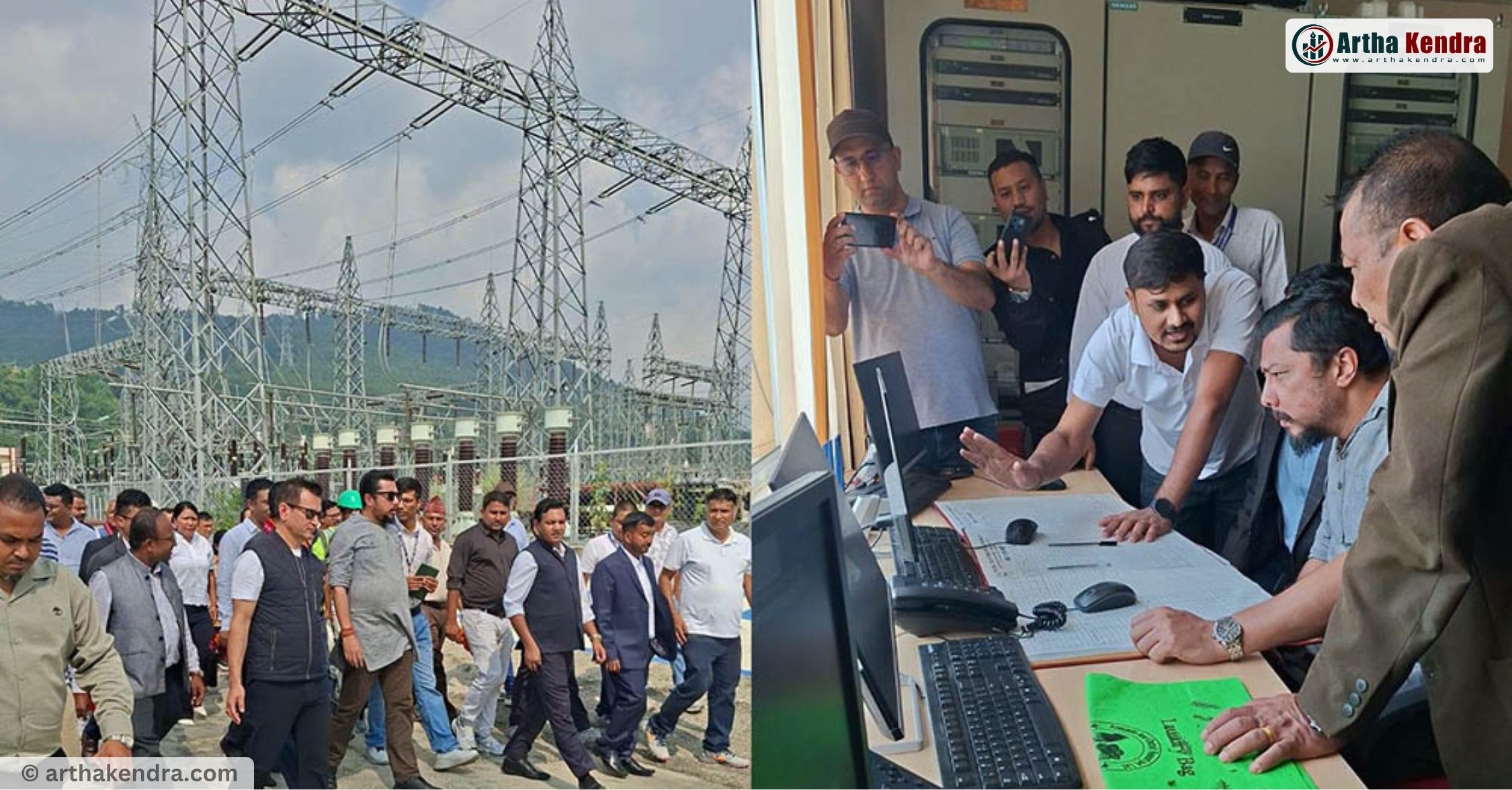
Hetauda–Dhalkebar 400 kV Transmission Line in Decisive Phase, Work on 14 Towers in Final Stage
The Hetauda–Dhalkebar 400 kV transmission line project, stalled for about 12 years, has reached a decisive phase of construction. According to Energy Minister Birajbhakta Shrestha, work on the remaining 14 towers in the Hetauda area is in its final stage. Once completed, the project is expected to strengthen east-west power flow and support the expansion of cross-border electricity trade.
Kathmandu. The Hetauda–Dhalkebar 400 kV transmission line project, which had been stalled for about 12 years due to various procedural problems, has reached a decisive phase of construction. The project, long delayed by issues related to compensation, land, and other procedural matters, has started gaining momentum following continuous efforts and coordination with stakeholders.
According to Minister for Energy, Water Resources and Irrigation Birajbhakta Shrestha, work on the remaining 14 towers in the Hetauda area is now in its final stage. He said the project has gained solid momentum due to the active involvement of local residents, people's representatives, district administration, stakeholders, and the Nepal Electricity Authority.
Once the Hetauda–Dhalkebar section is completed, east-west power flow is expected to become more robust, reliable, and sustainable. This will help strengthen the domestic electricity supply system and address growing industrial electricity demand.
Similarly, after the project's completion, it is said to make significant contributions in the following areas:
- Expansion of cross-border electricity trade
- Preventing wastage of electricity generated during the rainy season
- Enhancing the reliability of the national power transmission system
- Further expanding the potential for electricity trade
Minister Shrestha has urged the construction company to complete the remaining work on time. He also directed the relevant branches and bodies of the Nepal Electricity Authority to make necessary facilitation and coordination more effective.
Minister Shrestha thanked the people's representatives, local administration, affected citizens, the management, technical staff, and employees of the Nepal Electricity Authority, the construction company, and concerned government agencies for their support in bringing the project to this stage.