
Heavy Rain Forecast Puts Hydropower Projects in Gandaki Basin on High Alert
Nepal's hydropower projects in the Gandaki basin have been placed on high alert following forecasts of heavy rainfall from September 25 to 27. The Department of Electricity Development and the Nepal Electricity Authority are coordinating with private developers to monitor weather conditions and protect critical energy infrastructure, drawing lessons from recent Bhotekoshi floods.
KATHMANDU, Sept 25 — Hydropower projects across the Gandaki basin have been placed on high alert as Nepal braces for heavy rainfall forecast from September 25 to 27.
The Department of Electricity Development (DoED) under the Ministry of Energy, Water Resources and Irrigation issued the alert after the Meteorological Forecasting Division projected that the Gandaki region could be among the areas most affected by the heavy rain.
DoED Director General Sagar Raj Gautam said heightened vigilance had been adopted at hydropower projects operated by the Nepal Electricity Authority (NEA) as well as those run by the private sector.
According to Gautam, the NEA has instructed all its projects to continuously monitor weather updates and take necessary safety measures based on the forecasts. The Independent Power Producers’ Association, Nepal (IPPAN) is coordinating with the private sector, he said.
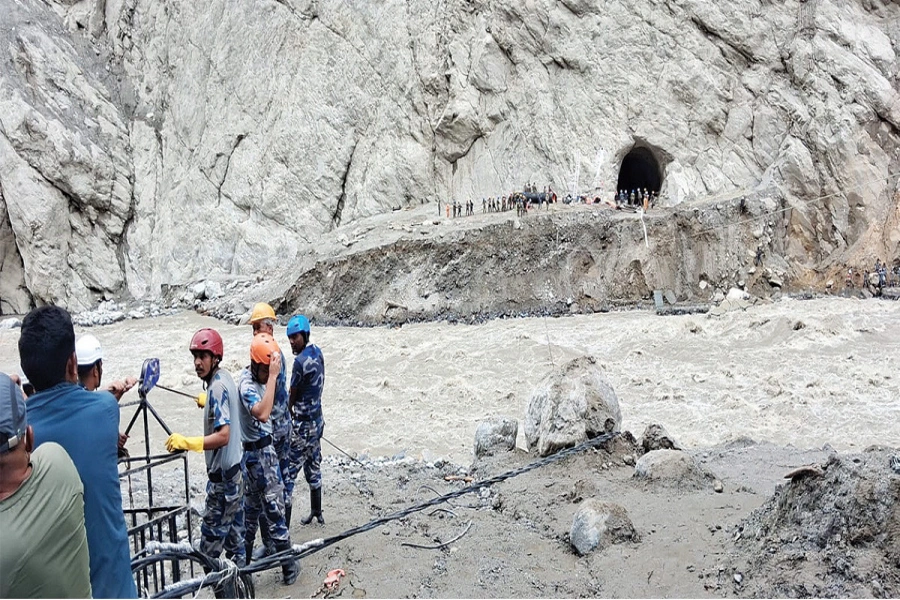
At a meeting of the NEA Board of Directors on Thursday evening, Energy, Water Resources and Irrigation Minister Biraj Bhakta Shrestha directed officials to draw lessons from the Bhotekoshi floods and take necessary measures to protect hydropower projects and electricity infrastructure in the Gandaki basin and other potentially affected areas.
NEA Managing Director Dirghayu Kumar Shrestha said all hydropower projects in the Gandaki basin had been kept on high alert around the clock.
He said the NEA was maintaining continuous coordination with the projects, while IPPAN had also deployed a representative at the NEA to coordinate on behalf of private-sector hydropower developers.
Ministry Spokesperson Mohan Kumar Shakya said the government had stepped up its focus on preparedness and early warning systems after the Bhotekoshi floods damaged electricity infrastructure, hydropower projects and substations, taking around 10 percent of the country’s electricity supply system offline.