
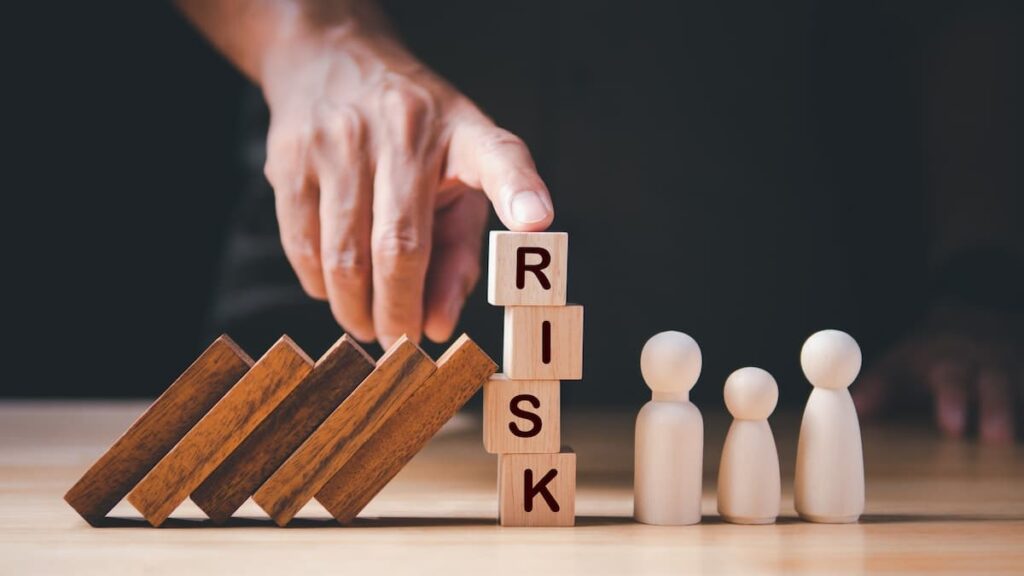
Global Economic Shocks: Rising Interconnected Risks Are Shaping a New Crisis Pattern
According to a new report by the Swiss Re Institute and the London School of Economics, risks reported by the world's largest companies are becoming increasingly interconnected. Compared to 2019, the connections between risks reported by 91 Fortune 100 companies have increased by 24 percent, with AI and supply chains being the primary links. This signals a new era of systemic risk where even limited shocks can spread quickly and far.
Kathmandu — A new joint report by the Swiss Re Institute and the London School of Economics (LSE) reveals that global risks are becoming increasingly interconnected. This is creating new pathways through which even limited economic shocks can spread quickly and far.
According to the report, compared to 2019, there is 24 percent more connection between the risks reported by 91 Fortune 100 companies. AI and supply chains are the primary links.
These findings signal a major shift in systemic risk. Risks are now linked across financial, digital, natural disaster, and socio-economic systems. The severity of the next major systemic crisis will depend less on the magnitude of the initial shock. Instead, it will depend more on where it hits and how far its impact spreads.
Growing reliance on shared suppliers, technology platforms, and critical infrastructure means that disruptions in one sector can spread to seemingly unrelated parts of the economy.
According to Jerome Haegeli, Chief Economist and Head of Swiss Re Institute, interconnected risks leave less room for error. He said, "In many developed economies, governments have fewer options for response. High debt and limited policy buffers mean resilience cannot be built when a crisis hits. It must be built beforehand. This requires reducing critical dependencies, strengthening buffers, and maintaining the capacity to transfer risk."
According to Ivan Gonzalez, CEO of Swiss Re Corporate Solutions, while a company may appear diversified across different sectors, its suppliers, technology providers, and customers may all rely on the same infrastructure. He said, "Therefore, a disruption can affect more components than expected. Understanding these dependencies can help companies reduce risk accumulation, increase resilience, and determine what they can bear themselves and what needs to be transferred."
Reporting of AI-related risks has now expanded beyond the technology sector. Between 2019 and 2026, the number of companies reporting AI and new technology-related risks has increased by nearly 30 percent. This includes industries such as retail, airlines, pharmaceuticals, and food. If companies and financial institutions rely more on common technology and similar AI models, stress can trigger faster and more simultaneous reactions.
According to Jon Danielsson, Director of the Systemic Risk Centre at LSE and Reader in Finance, people often prepare for the previous crisis and try to predict the next one. He said, "However, a systemic crisis is defined by what happens after the shock, and AI could completely change this. If institutions use similar models excessively and react at machine speed, a limited-scope shock could turn into a systemic crisis before we have time to react. The challenge is not to predict the next crisis. But to be prepared for shocks we cannot anticipate."
Supply chains are also a key aspect of risk interconnection. Geopolitical tensions, tariffs, weather events, pandemics, and cyberattacks can all influence and amplify each other through supply networks. This creates many pathways for disruptions to spread across companies and sectors. Natural disasters can turn local disruptions into major risks.
Since 2019, corporate mentions of climate risk have increased by nearly 31 percent. More than a quarter of US data centers are located in areas that experience at least three days of large hail per year and more than 40 percent are in areas at high risk of hurricanes.
In Taiwan, 88 percent of semiconductor plants are located in areas at high risk of earthquakes. When natural disasters affect concentrated infrastructure that a large part of the economy depends on and cannot be easily replaced, local shocks can spread throughout the entire economy. Concentration risk (the concentration of risk in one place) is not only geographic.
In 2024, three providers controlled 70 percent of global cloud infrastructure, while three companies processed 97 percent of global credit card transactions.