
Gas Bottlers Assure Normal LPG Supply as Prithvi Highway Reopens
Nepal LP Gas Industry Association (NLPGIA) has announced that LPG supply to Kathmandu Valley will normalize from Friday, with the removal of the Rs 105.38 per cylinder premium charge. The reopening of an alternative route on the flood-damaged Prithvi Highway has eased transportation, ending weeks of acute shortage and black marketeering.
KATHMANDU, Sept 17 – Gas bottlers have assured consumers in the Kathmandu Valley that the supply of cooking gas will be normalized from Friday, urging the concerned parties to purchase Liquefied Petroleum Gas (LPG) from their respective depots.
Issuing a press statement on Thursday, the Nepal LP Gas Industry Association (NLPGIA) said consumers will not need to pay surcharges beyond the normal rate to purchase the kitchen essential, effective from September 18. Citing the disruption on the Prithvi Highway and a rise in transport cost, the gas bottlers had been taking Rs 105.38 per cylinder in premium charge, slapping a cylinder of LPG for Rs 2,165.38.
From Friday onward, consumers will be made available with the LPG for the normal rate of Rs 2,060 per cylinder, according to the NLPGIA.
"As an alternative track has been opened on the disrupted highway segment and LP gas bullets have started this route to supply the gas to the valley, it has removed the compulsion to fill the cylinders outside the valley and helped ease the supply," reads the press statement.
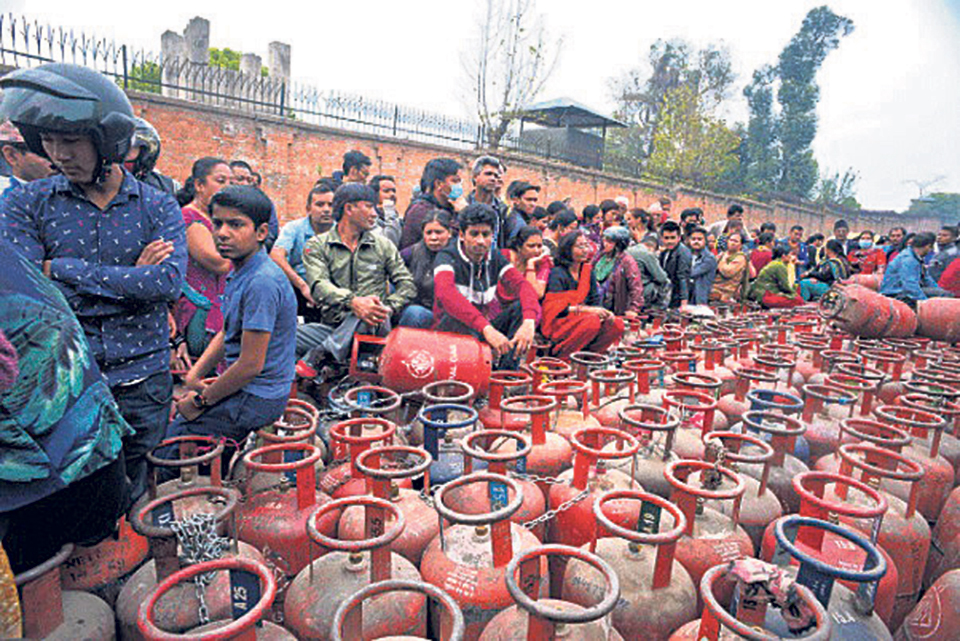
Since the Nepal Oil Corporation (NOC) switched to the full-fledged LPG cylinder from half-filled on July 15, the valley-based consumers have been facing a shortage of the cooking gas. The situation got worse after the Bhotekoshi-Trishuli flood on August 26 eroded the Krishnabhir segment of the Prithvi Highway, disrupting the movement of gas bullets through the main lifeline land-connectivity of the valley.
Due to the ongoing acute shortage and flourishing black market, consumers have been forced to pay as high as Rs 3,000 to fetch a cylinder filled with the LPG. In addition, they have been compelled to stand in long queues throughout the day and wait for weeks for their turn.