
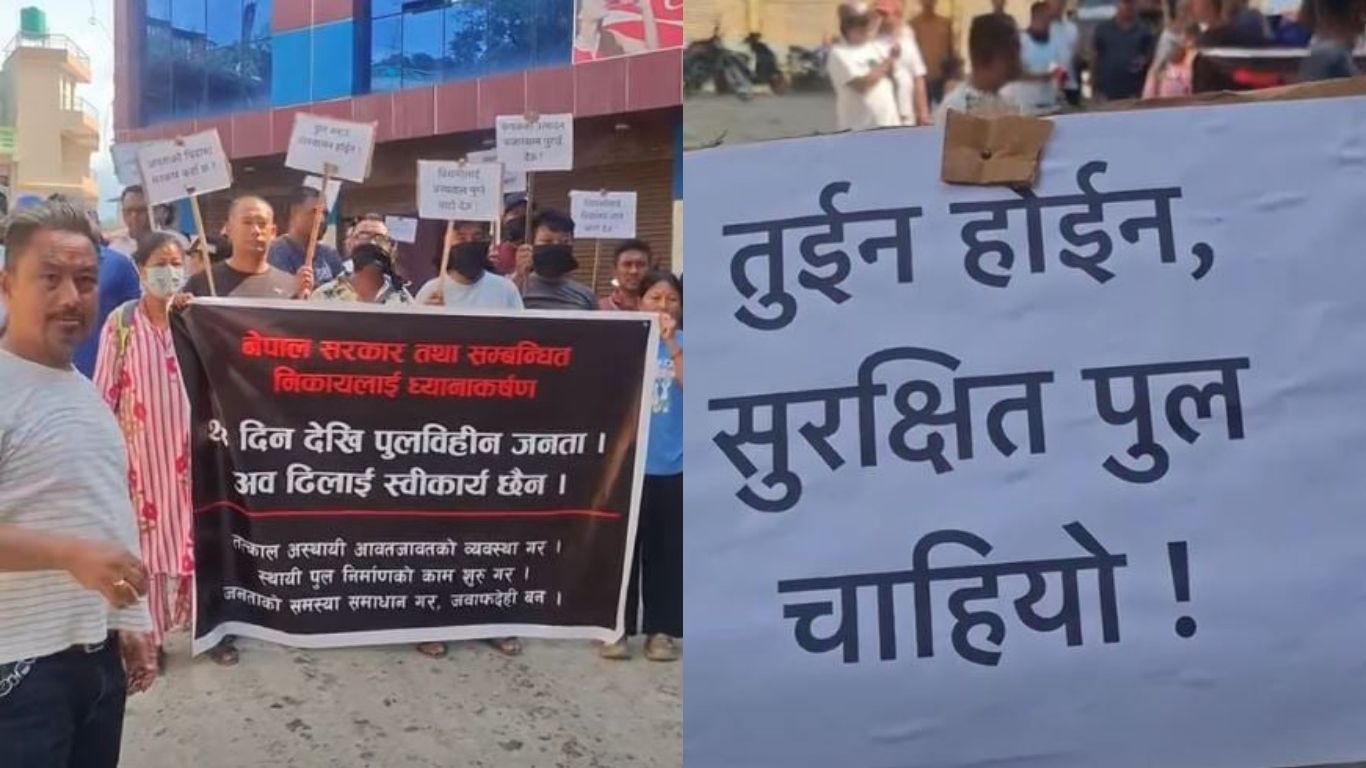
Flood Victims Protest Demanding Immediate Trishuli Bridge Reconstruction as Infrastructure Damage Hits Local Economy
Following the destruction of the Trishuli River bridge by devastating floods on August 26 (Bhadra 10), residents of Nuwakot have staged protests demanding immediate temporary crossing arrangements and permanent bridge construction. The cutoff in transportation connectivity has severely crippled local livelihoods, trade, and economic activities. Residents highlighted that risky cable crossings (tuins) are unable to handle the daily movement of commuters and goods.
KATHMANDU — Residents of Nuwakot have launched strong protests demanding the restoration of road and transport connectivity after devastating floods on August 26 swept away the crucial Trishuli River bridge. The destruction has severed direct links between both sides of the Trishuli River, severely impacting local economic and social activities.
Protesters chanted slogans such as "Delay is no longer acceptable," "Arrange immediate temporary crossing," "Initiate permanent bridge construction," and "Government must be accountable," expressing frustration over sluggish infrastructure restoration efforts.
Key demands and current challenges include:
- Economic and trade impact: Disrupted transport has hampered the supply of local agricultural produce to markets and the import of essential goods.
- Risky cable crossings: Temporary tuins (cable crossings) installed in some areas are incapable of handling high traffic volumes and pose severe safety hazards.
- Urgent relief demand: Immediate alternative arrangements for safe temporary passage alongside long-term bridge reconstruction.
With the destruction of local infrastructure severely disrupting supply chains across Nuwakot and surrounding regions, citizens are demanding that the government prioritize immediate physical infrastructure reconstruction.