
Finance Minister Wagle Urges Indian Investors to Invest in Nepal
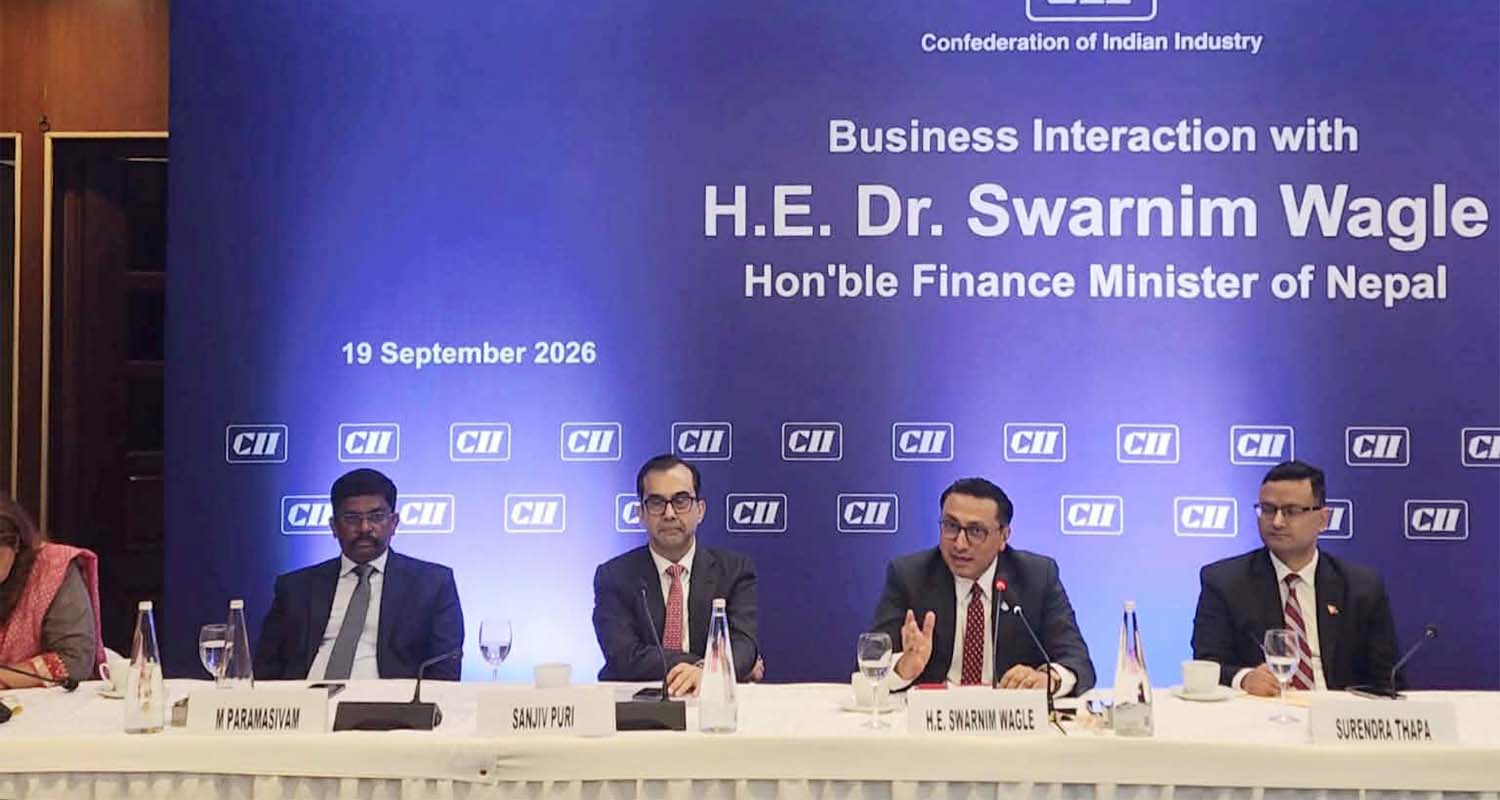
Finance Minister Dr. Swarnim Wagle has called on Indian industrialists and businessmen to explore investment and trade opportunities in Nepal. At a roundtable organized by CII in Delhi, he urged the Indian private sector to participate in Nepal's economic transformation.
Kathmandu — Finance Minister Dr. Swarnim Wagle, who arrived in Delhi on Thursday with expectations of Indian government support for reconstruction after the devastation of the Bhote Koshi flood and for relief and rescue of those affected, has called on Indian investors, industrialists, and businessmen to seek and expand investment and trade opportunities in Nepal.
Addressing a roundtable discussion with industrialists organized at the headquarters of the Confederation of Indian Industry (CII) in New Delhi, Finance Minister Wagle urged Indian entrepreneurs and businessmen to seize the benefits, saying this is the appropriate time to invest in Nepal.
The event was attended by Indian entrepreneurs and private sector representatives to discuss investment and trade opportunities in Nepal. Finance Minister Wagle urged Indian businesses to participate in the country's economic transformation, noting Nepal has emerging investment opportunities.
He said, 'There are abundant investment opportunities in sectors with high growth potential in Nepal. I urge Indian companies already operating in Nepal to expand their investments and new investors to explore the Nepali market.'
Minister Wagle said the Nepal government is moving forward with an agenda of good governance, economic prosperity, investment facilitation, and structural economic transformation. He informed about the government's efforts to accelerate policy reforms and create a more predictable, transparent, and investment-friendly business environment.
According to Finance Minister Wagle, digitalization, clean energy, high-value agricultural production, wellness tourism, and production based on the concept of production sharing are emerging as important drivers of Nepal's economy.
He urged Indian businesses to engage with Nepal not merely as a market but as a partner in investment, production, value addition, and regional and global supply chains.
The Finance Minister informed about the recent steps taken by the government in the annual budget, tax reforms, and investment-friendly policy initiatives to reduce investment barriers and facilitate private sector-led economic growth.
Dr. Wagle emphasized the immense potential in Nepal-India economic partnership, particularly in investment, production, energy, tourism, agriculture, the digital economy, and other emerging sectors. 'The long-term economic relationship between Nepal and India has provided a strong foundation for expanding bilateral trade and investment,' he said.
Indian entrepreneurs participating in the interaction expressed their commitment to being ready for business and investment opportunities in Nepal. They raised questions with the Finance Minister about Nepal's investment policy, incentives, sectoral opportunities, and business environment.