
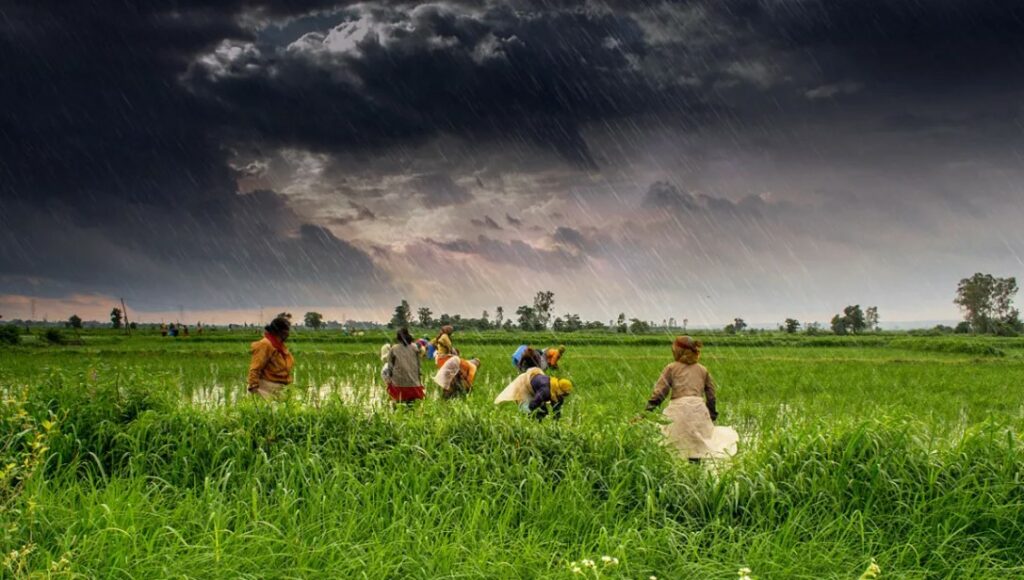
Farmers in four districts benefit from weather index-based paddy insurance
Due to continuous heavy rainfall from September 25 to 27 (Ashwin 9–11), 348 farmers in Banke, Bardiya, Kailali, and Kanchanpur whose paddy crops were damaged received immediate payouts from parametric paddy insurance. According to weather station data, when rainfall exceeded the 200 mm threshold, insurance claims were automatically triggered, allowing farmers to receive relief without lengthy administrative processes.
Kathmandu. 348 farmers whose paddy crops were damaged by continuous and excessive rainfall from Ashwin 9 to 11 (September 25–27) have received climate insurance payouts.
Following the devastating landslide and floods in Rasuwa, the nationwide rainfall affected both the pre- and post-harvest stages (paddy left to dry in fields) across all 9 districts where parametric (weather index-based) paddy insurance was implemented.
According to weather station data, when rainfall exceeded the 200 mm threshold, insurance claims were automatically triggered in 4 districts: Banke, Bardiya, Kailali, and Kanchanpur. While flood and inundation risks persisted nationwide, these farmers did not have to wait through lengthy administrative processes or for damage assessments.
According to PlantSat, an organization providing satellite-based data and weather information as technical support for this insurance, under the insurance scheme, a total of NPR 612,799 is being paid to 348 farmers for paddy crop losses across a total area of 2,345 katthas.
Under the parametric insurance system, there is no need to fill out forms, have teams conduct inspections, or endure delays. In this system designed with Sagarmatha Lumbini Insurance, funds are directly transferred to farmers as soon as the weather station confirms that the threshold has been exceeded.
The risks of climate change are increasing faster than our traditional mechanisms can handle. However, this initiative, involving 1,204 smallholder farmers, has proven that with the right combination of appropriate technology and policy arrangements, farmers do not have to face the climate crisis alone.
Farmers affected by the climate crisis did not have to wait for years for relief this time. They received payments on time and are ready to plant new crops, according to PlantSat.