
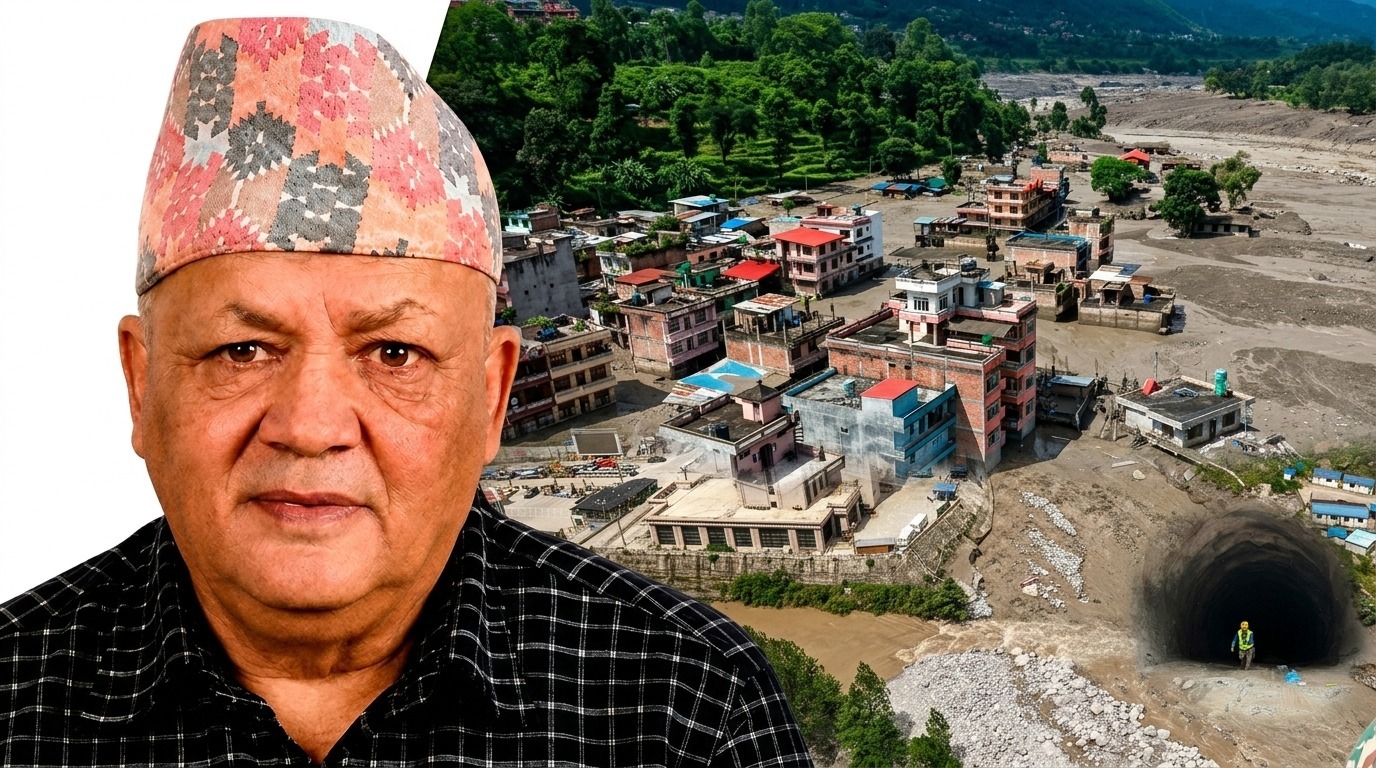
Devastating Impact of Bhote Koshi Flood: Need for Cooperation in Climate Justice and Risk Reduction
The massive flood that entered Nepal through the Bhote Koshi River on Bhadra 10, 2083 BS caused huge loss of life and property in the coastal areas of Rasuwa, Nuwakot, Dhading, Gorkha, Chitwan, Tanahun, and Nawalparasi districts. This incident has severely affected Nepal's economy and highlighted the sensitivity of the Himalayan region to the effects of climate change. The need for international cooperation in climate justice and disaster risk reduction has further increased.
Devastating Impact of Bhote Koshi Flood
On Bhadra 10, 2083 BS, the massive flood that entered Nepal rapidly through the Bhote Koshi River caused a tragic and devastating impact in the coastal areas of Rasuwa, Nuwakot, Dhading, Gorkha, Chitwan, Tanahun, and Nawalparasi districts. It will take a long time to obtain the comprehensive details of the loss of life and property caused by this flood. There has been a large number of irreparable human losses, and many ancient cities and historical heritage sites of the country have been destroyed. Physical structures have been damaged, which has pushed the country's economy significantly backward.
Impact of Climate Change and Demand for Climate Justice
In recent times, the amount of carbon emissions in the world has been increasing excessively, and its adverse effects have been even greater in the extremely sensitive Himalayan region from a climate perspective. In the Himalayan region, incidents such as sudden landslides, floods in glacial rivers due to melting glaciers, bursting of glacial lakes due to their impact, and the creation of new lakes posing additional risks are increasing.
Therefore, climate activists have begun raising voices at the international level that countries with higher carbon emissions must provide compensation. There are many areas in Nepal at high risk of natural disasters and epidemics.
Policy Efforts and Challenges
Many policy and legal arrangements have been made for natural disaster and epidemic risk reduction, rescue, and management. However, the "response-oriented" tendency to become active only after an incident has occurred has led to greater damage. Therefore, it is imperative to intensify preventive actions with equal vigilance for the preparedness of natural disaster and epidemic risk reduction that may occur in the country.
1. Sensitivity of Geographical Location
Due to earthquake risk and crises arising from climate change, Nepal falls among high-risk countries. Nepal's Himalayan region is at high risk of earthquakes, avalanches, glacial lake outbursts, and flash floods due to climate change, weak geological structure, and geographical location. As a result of global climate change, the risk of rapid glacial melting causing floods in glacial rivers, bursting of glacial lakes, and sudden large floods in lower coastal areas is increasing. Being in the Himalayan belt, this region is also extremely sensitive and at high risk from a seismic perspective.
2. Rapid Impact of Climate Change
Nepal is experiencing the adverse effects of global climate change at a rapid pace. According to a study conducted by ICIMOD and UNDP in 2020, the process of glacial melting and the formation of new glacial lakes is increasing. 47 glacial lakes are at high risk. Among them, 21 lakes fall within Nepal's territory. Of the rest, 25 are in China and one in India.
Chhorolpa in Dolakha district, Imja in Solukhumbu, Manaslu in Lamjung and Thulagi in the Marsyangdi River basin, lower Barun in Sankhuwasabha, Lumding and Chamlang in the Koshi basin, among others, are the most at-risk glacial lakes.
No study has been conducted on glacial lakes since 2020. It is said that a new glacial lake named "Lake-Two" was formed on the slope of Langtang Himal in Rasuwa due to a glacial river and rockfall in the Nepal-China border area, and that this lake burst and caused the devastation on last Bhadra 10.
3. Extremely High Risk of Disasters and Epidemics
Nepal is also a highly disaster-sensitive country due to geographical, social, and environmental reasons. Every year, there is huge loss of life and property from various types of natural and man-made disasters. The risk of epidemics and other disasters is also continuously increasing due to human-induced causes such as encroachment on nature, unplanned urban development, and excessive use of toxic substances. It is estimated that an average of more than 80 percent of the population is at risk of some form of disaster.
Activities such as land degradation in the name of infrastructure construction and settlement development, encroachment on rivers, water drainage and flow paths, risky settlements along riverbanks, and unplanned urban development are increasing the risk of terrible disasters. The adverse effects on the health of humans, livestock, birds, and all living beings from the excessive use of toxic pesticides and various chemical substances are even more terrifying. No living being is free from this.
Nepal's population is becoming increasingly urban-oriented. Lowland and coastal areas have turned into new cities. High mountain areas are becoming devoid of human settlements. The tendency to buy rather than grow food has increased. Dense settlements and narrow roads have made rescue operations themselves