
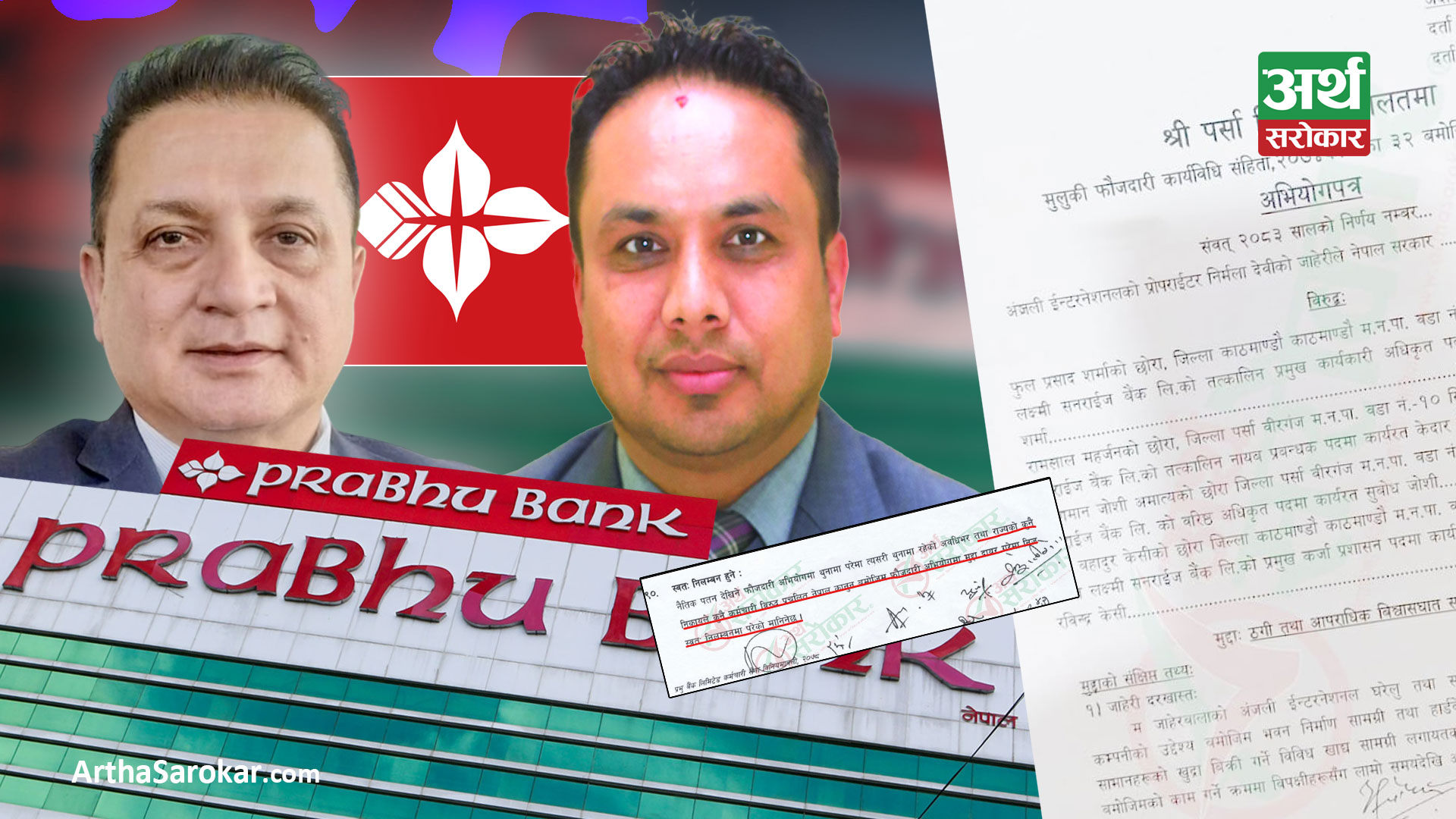
Criminal case filed against Prabhu Bank CEO Sharma on Asoj 1, still in office until Asoj 13
Despite a criminal case for fraud and criminal breach of trust being filed against Prabhu Bank CEO on Asoj 1, he was present in office until Asoj 13, the bank confirmed. Although the bank's employee regulations require automatic suspension upon filing of a criminal case, the CEO remained at work for 12 days, raising questions about the bank's internal governance.
Kathmandu — Although a criminal case for fraud and criminal breach of trust was filed against the Chief Executive Officer (CEO) of Prabhu Bank on Asoj 1, he was found to have been present in office until Asoj 13. According to the bank's employee regulations, an employee must be automatically suspended once a criminal charge is filed.
According to the bank's information officer Rabindra Dhakal, the CEO was in office until Tuesday, Asoj 13. He said, "The CEO sir was in office until Tuesday (Asoj 13). Today, Wednesday (Asoj 14), he is on leave taking force leave." The Human Resources department has informed via email that the CEO is on 12 days of force leave.
The bank's approved employee regulations state:
- "If any state body files a criminal charge against an employee under the prevailing laws of Nepal, that employee shall be deemed automatically suspended."
- "If detained in a criminal charge involving moral turpitude, the employee shall remain suspended for the entire period of such detention."
- "And if any state body files a criminal charge against any employee under the prevailing laws of Nepal, that employee shall be deemed automatically suspended."
Analyzing these provisions, CEO Sharma should be automatically suspended. According to the regulations obtained from senior bank officials, he will be suspended and the suspension will be lifted only if he is acquitted in the case.
This incident has raised serious questions about the bank's internal governance and regulatory compliance. The CEO continuing in office for 12 days even after a criminal case was filed indicates a delay in the implementation of the regulations.