
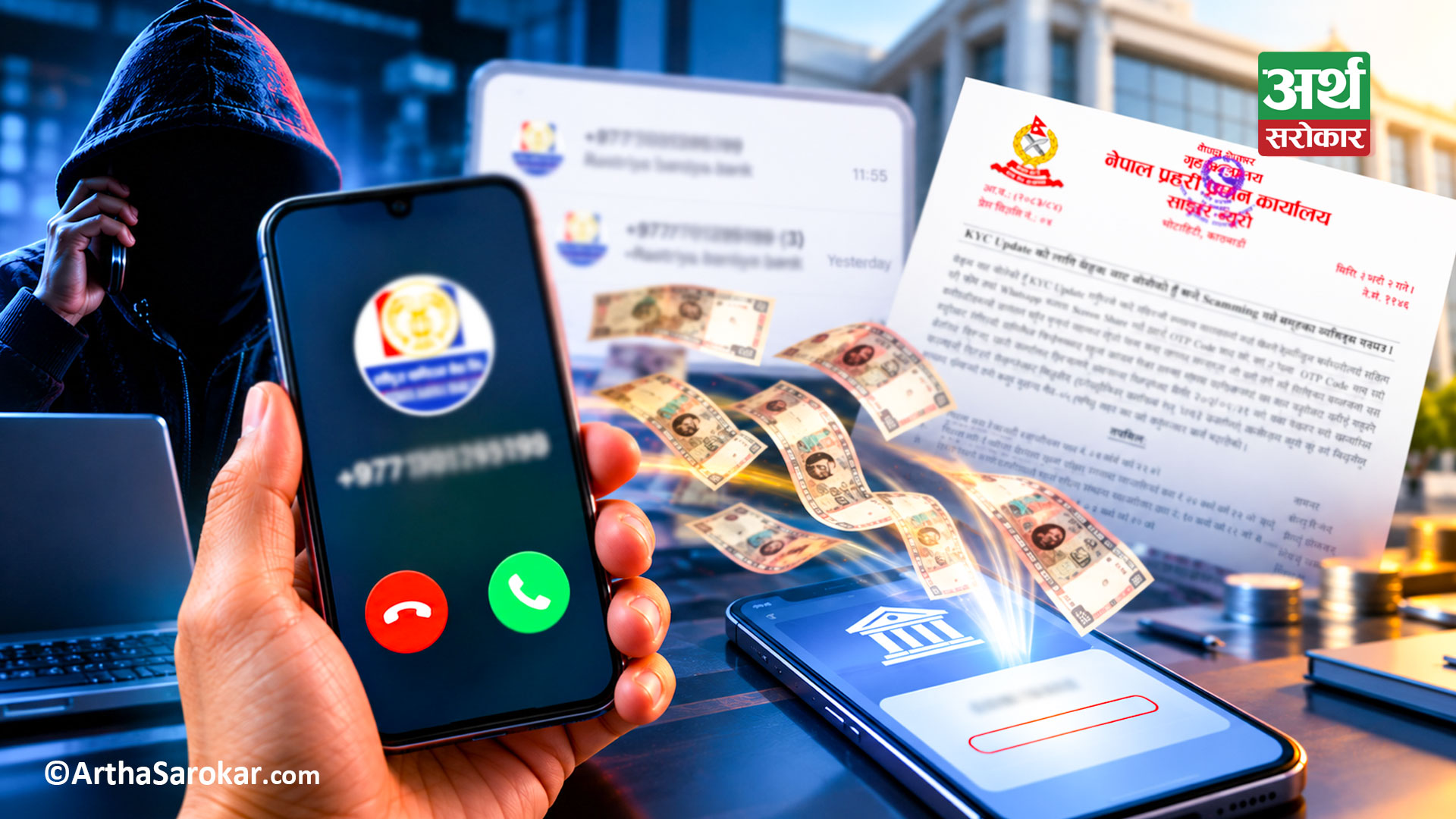
Clicking a 'system update' link emptied a bank account of Rs 93,000 in an instant
A person lost about Rs 93,000 after entering confidential details through a link that appeared to be an official bank system update notice. As such incidents of fraudsters demanding mobile banking IDs, passwords and transaction PINs rise, Nepal Police has urged the public to stay alert.
Kathmandu — What happens if money you saved in the bank over years is stolen by someone else in 5 seconds without your knowledge? What if the account you believed was safe is emptied before your eyes? This is not a film plot — it has become the real experience of many people lately.
Incidents are rising day by day where fraudsters call posing as bank employees, scare people by saying their account is about to be closed, send links in the name of KYC update, and lure them with attractive offers to extract OTP, PIN and passwords. In the latest such case, a person was defrauded of about Rs 93,000 from their account under the pretext of a bank system update.
According to information received through social media, the victim's mobile phone received a system update notice at around 5:30 pm. The notice asked for confidential details including mobile banking ID, password, mobile number and transaction PIN.
After entering those details believing it to be an official bank notice, the victim's mobile phone remained off for about 15 minutes. The phone came back on after 15 minutes, but by then about Rs 93,000 had disappeared from the bank account. After realizing they had been defrauded, the person complained on social media.
Such incidents have increased sharply of late. Arthasarokar.com has also been receiving many complaints — bank account emptied, I was cheated, my phone switched off after clicking a link, and money vanished when the phone came back on. Nepal Police has also been urging the public to exercise special caution as phone and online frauds in the name of banks and financial institutions are on the rise.
According to police, if anyone calling as a bank employee asks for OTP, password, ATM card PIN, mobile banking password or other sensitive details in the name of KYC update, account renewal or any other process, such details must never be shared under any circumstances.
Digital banking fraudsters use psychology along with technology. They know that people react quickly when shown fear and greed. So they call or message with lures such as:
- Your account is about to be closed
- Your card is about to be blocked
- You have won a prize
- A bonus has been credited to your account
- You have been offered a special loan facility
If you receive such a message or call, do not make a hasty decision. First contact the bank through its official website or official contact channel and confirm whether the notice is genuine.
The risk of banking fraud is not limited to ordinary people. Recently, Italy's large bank Intesa Sanpaolo was also defrauded after falling victim to a fake voice generated by AI. More than 95 million euros — about Rs 16.58 billion — was found stolen from a branch of the bank. Although more than half of the defrauded amount has been recovered, about 36 million euros is still to be returned, Italian media reported.
A fraudster tries to win your trust before stealing your money. Their language may be polite, their voice may sound credible, they may say the bank's name correctly and may even know some of your personal details. But that does not mean they are a real bank employee.
So do not trust merely because a voice sounds familiar, a name is known or a bank logo is visible. Verify first, think, and only then act. One click can make our work easier, but a wrong click can create a big risk. An OTP can secure a transaction, but giving that same OTP to the wrong person can cause trouble. So before blaming technology, we must learn to use it safely.