
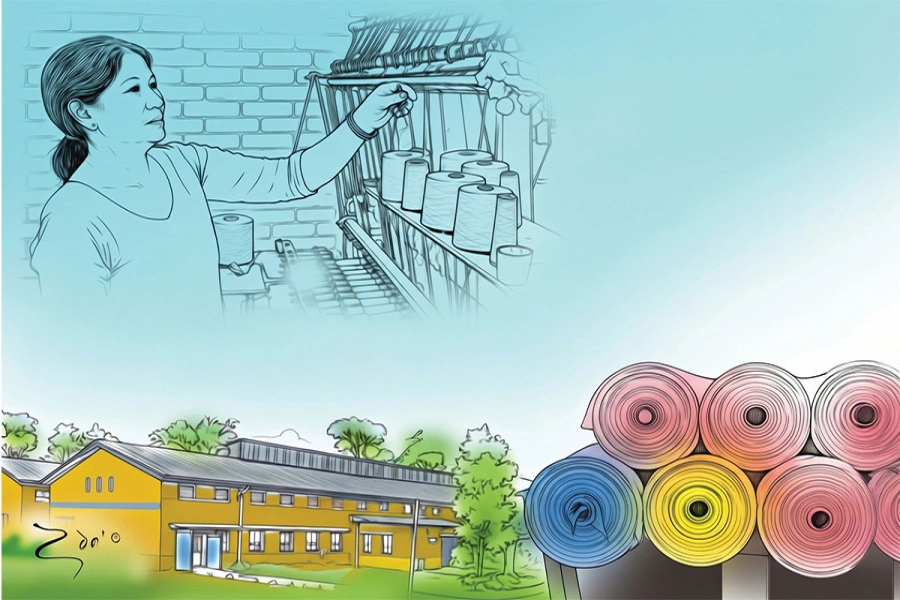
Biratnagar's Industrial Decline: Factories Move Out as City Loses Manufacturing Base
Biratnagar, once Nepal's premier industrial hub, is witnessing a steady exodus of industries as factories relocate to surrounding areas due to urban congestion, high land costs, and decades of political interference. Industrialists warn that without a designated industrial estate and improved investor confidence, the city's manufacturing legacy may fade entirely.
BIRATNAGAR, Oct 7 — Chandra Shiva Rice and Oil Mill, one of Biratnagar's oldest industries, has relocated from Thulo Mill Chowk to Hattimuda in Budhiganga Rural Municipality, underscoring a broader shift of industries away from the city.
The mill was among the earliest industries in northern Biratnagar, and urban settlements gradually developed around it. The intersection east of Kanchanbari became known as Thulo Mill Chowk because of the factory. Although the mill has now moved, the name remains.
Biratnagar has a long industrial history. Biratnagar Jute Mill, Nepal's first major industry, was established in the city's southern area. It was followed by Morang Sugar Mill, Ashok Textile, a match factory and several other industries. The southern Rani area is still known as the Mills Area.
These factories turned Biratnagar into Nepal's first major industrial center. The city also became the birthplace of the country's labor movement when workers at Biratnagar Jute Mill launched strikes demanding their rights. The site associated with those protests is still known as Hadatali Haat.
Industries also drove Biratnagar's economic growth. Early factories provided employment and markets for agricultural products from Morang and neighboring districts. Industries processed locally produced jute, cotton, rice and oilseeds and exported finished products.
The growth of jute, textile, sugar, oil and soap factories encouraged farmers in Morang, Sunsari and Jhapa to increase agricultural production, helping establish Biratnagar as eastern Nepal's industrial hub.
But the picture began changing several decades ago.
Industrialists say excessive political interference in state-owned factories, combined with growing competition from Indian industries, weakened Biratnagar's manufacturing sector. Many factories could no longer compete internationally.
Biratnagar Jute Mill, Ashok Textile, match, cotton and button factories were among the industries that began shutting down around the late 1990s. Most of the city's old factories have since closed.
Related story: Cement, steel industries in trouble as demand stagnates
Private investment, however, continued outside the city. Hundreds of industries have been established along the Sunsari Morang Industrial Corridor, particularly around the Koshi Highway and connecting roads.
Rapid urbanization has meanwhile made it increasingly difficult to establish large factories inside Biratnagar. Industrial land is scarce and expensive, pushing new investment toward Budhiganga, Katahari, Duhabi, Sonapur and other surrounding areas.
Morang Industry and Trade Association President Anil Shah said Biratnagar remains the economic base for industries operating around the city.
"Biratnagar has changed from an industrial city into a city of industrialists," Shah said.
He argued that Biratnagar's industrial identity should be viewed beyond the metropolitan boundary because many industries in surrounding municipalities originated from investment based in the city.
Shah said the government should focus on reviving the entire Sunsari Morang Industrial Corridor. He questioned why industrial growth has slowed in the region while areas such as Birgunj and Bhairahawa, which industrialized much later, continue to attract factories.
Industry Organization Morang President Nandakishor Rathi said years of political instability and recent developments have weakened investor confidence. Industrialists now hope the new government formed after the Gen Z movement and subsequent election will improve investment security and the business environment.
Rathi said new factories could begin opening again if investors regain confidence.
Three-decade demand ignored
Industrialists have demanded a designated industrial estate for more than 30 years, largely because buying land can now cost more than investing in the factory itself.
Successive governments have failed to address the demand, Rathi said.
"We have been demanding an industrial area for decades, but no government has listened," he said.