
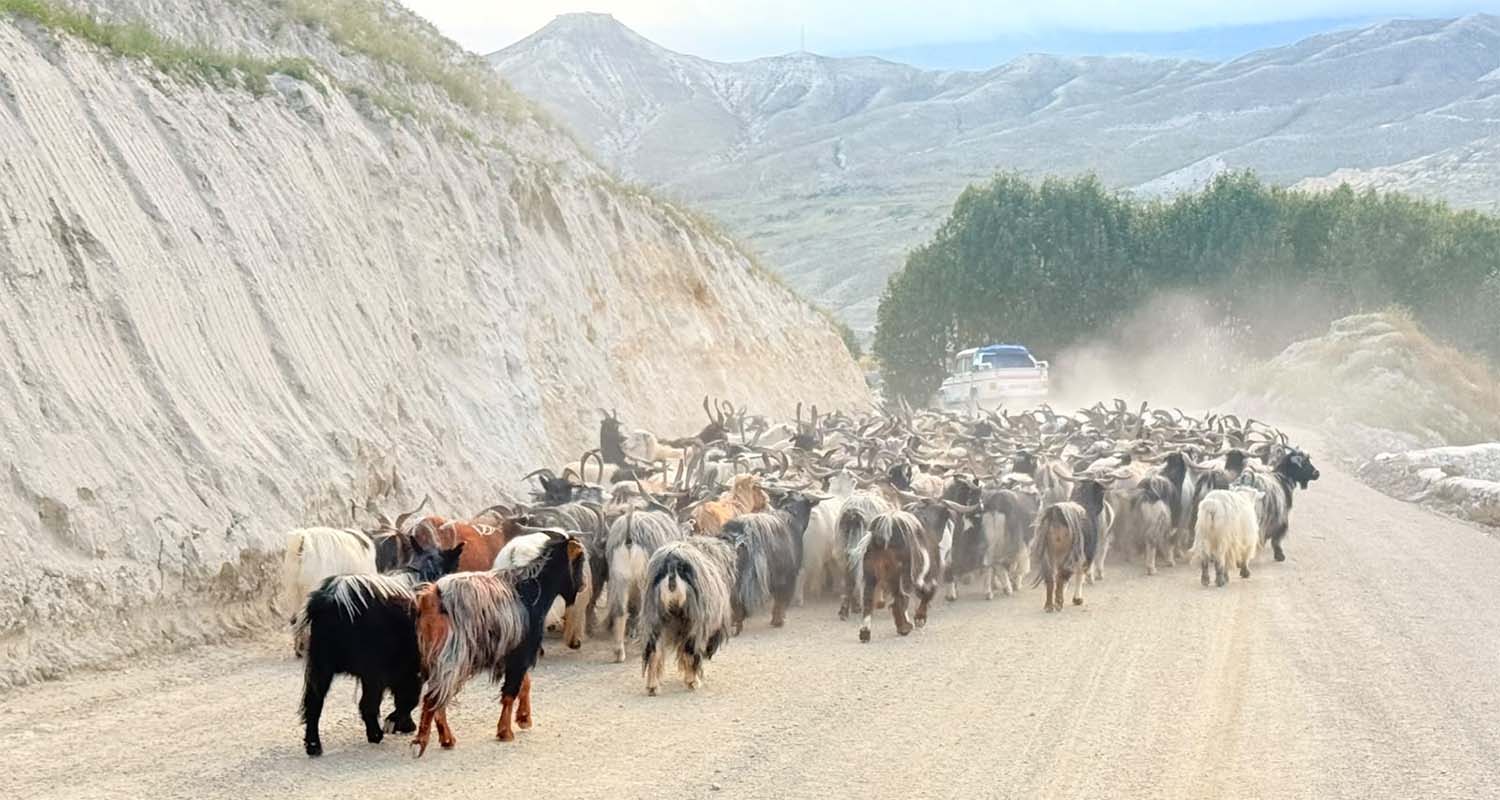
Ahead of Festivals: Tibetan Sheep and Goats Import Begins via Korala Checkpoint
Import of sheep and goats from Tibet, China via the Korala checkpoint has begun targeting the festive season. For the first time in five years, 419 sheep and goats have entered, expected to boost trade in Mustang.
Kathmandu. Targeting the festive season, sheep and goats have started entering through the Lizi–Nechung (Korala) checkpoint via Tibet, China.
After five years of ceasing imports of sheep and goats from Tibet via the Korala checkpoint, businessmen of Mustang have this time brought 419 sheep and goats through the Korala checkpoint after other checkpoints connected to China were closed.
Dr. Ganesh Kesi, chief senior veterinarian at the Pokhara Animal Quarantine Office, said that businessmen from Upper Mustang purchased and brought the animals through the Korala checkpoint via Dhongwasen in Tibet, an autonomous region of China.
Dr. Kesi said, "As per the Quarantine Act, the imported sheep and goats from China have been tested; they cannot be mixed with local flocks for a week, and a technical team monitors them."
Even though the sheep and goats from Tibet have animal health certificates, the vaccination details were not mentioned, so the center, in coordination with Lomanthang Rural Municipality, vaccinated them, according to Dr. Kesi.
In Nepal, before purchasing and bringing livestock from any country, there is a provision to inform the quarantine office one week in advance with animal health certificates and vaccination details.
For the import of animal products from Korala, under the Ministry of Agriculture and Livestock Development, the animal quarantine office has a sanctioned strength of three people including a veterinarian, but currently, one technician is in Nechung and the Pokhara office oversees it.
In the past, Tibetan sheep and goats were kept in sheds for a long time, causing problems such as not walking when taken via walking routes and separating from the Mustang flocks, so traders stopped purchasing them.
Although sheep and goats entered through the Korala checkpoint for the first time after the checkpoint was commercially operated for a year, in the past, businessmen from Mustang and Tibet had a practice of barter or exchange of goods.
After the Chinese provided food grains along with pashmina materials, there was a tradition of sheep and goats coming from there. Recently, as Tibetan traders sought to trade in cash, Mustang traders expanded their own sheds and increased production.
A month ago, 10 containers of sheep wool were imported through the Korala checkpoint.
After Tibet was annexed to China in the 1960s, Khampas from Tibet rebelled using Nepali land, which halted the trade. After the official opening on 27 Kartik 2080 BS, efforts are being made to activate quarantine for the inspection of agricultural and animal products for the first time.
If additional testing of animal products imported from China is required beyond Nechung and Pokhara, they are sealed and sent directly to the Chobhar Dry Port.
Sheep and goats raised for about three to five years on herbs in harsh climates at altitudes above 2,500 meters above sea level are preferred because they are delicious and beneficial for health.
Last year, trade worth around 35 crore rupees took place from Mustang. This year, with the import of sheep and goats from Tibet, prices are expected to become somewhat cheaper.